
Medical Surgical Instruments – Trigonal Neurological Reflex Patella Hammer, Taylor-Type Medical Hammer
The Trigonal Neurological Reflex Patella Hammer, also known as a Taylor-type reflex hammer, is a clinical diagnostic instrument designed for healthcare professionals to assess tendon reflexes during neurological and physical examinations.
Featuring a compact triangular-style striking head and ergonomic handle, this medical instrument is intended to provide controlled percussion during routine clinical assessments. It can be suitable for hospitals, clinics, neurological departments, physiotherapy practices, medical distributors, and professional healthcare facilities.
What Is a Neurological Reflex Hammer?
A neurological reflex hammer is a handheld diagnostic instrument used by trained healthcare professionals to elicit deep tendon reflexes.
During a neurological examination, controlled tapping of an appropriate tendon can produce a reflex response. The clinician evaluates the response alongside other findings to help assess neuromuscular function.
A reflex hammer is a diagnostic examination instrument, not a treatment device.
Taylor-Type Reflex Hammer
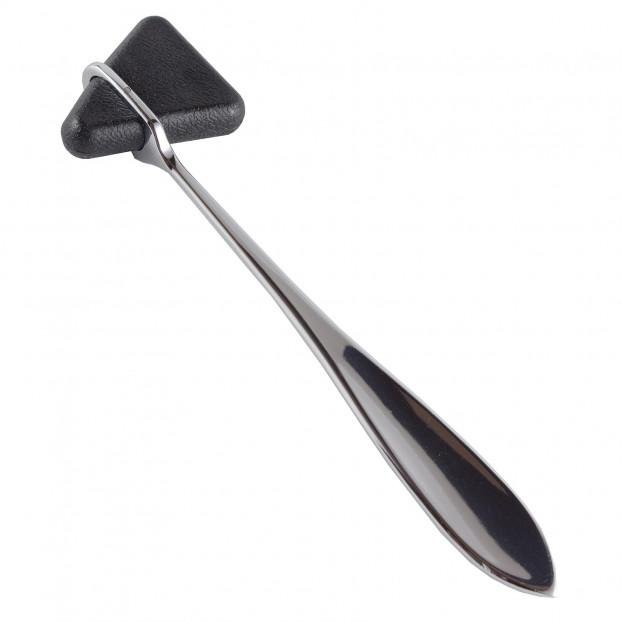
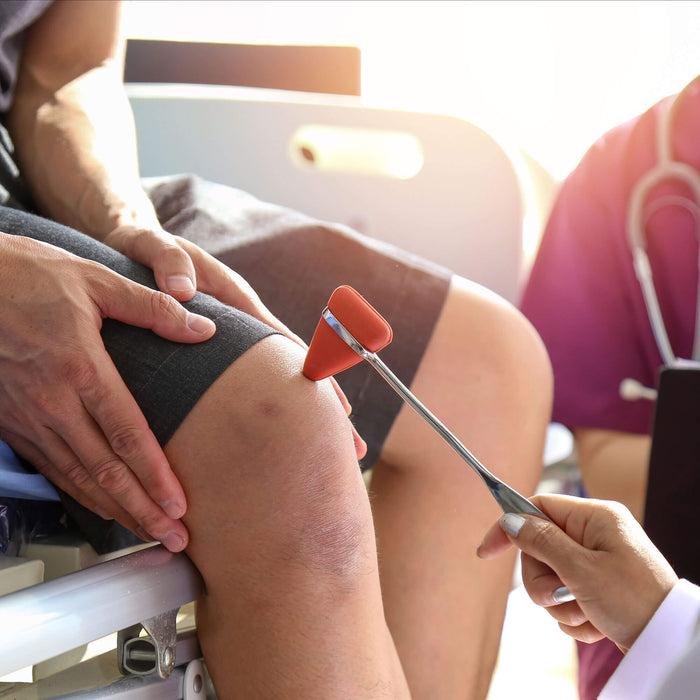
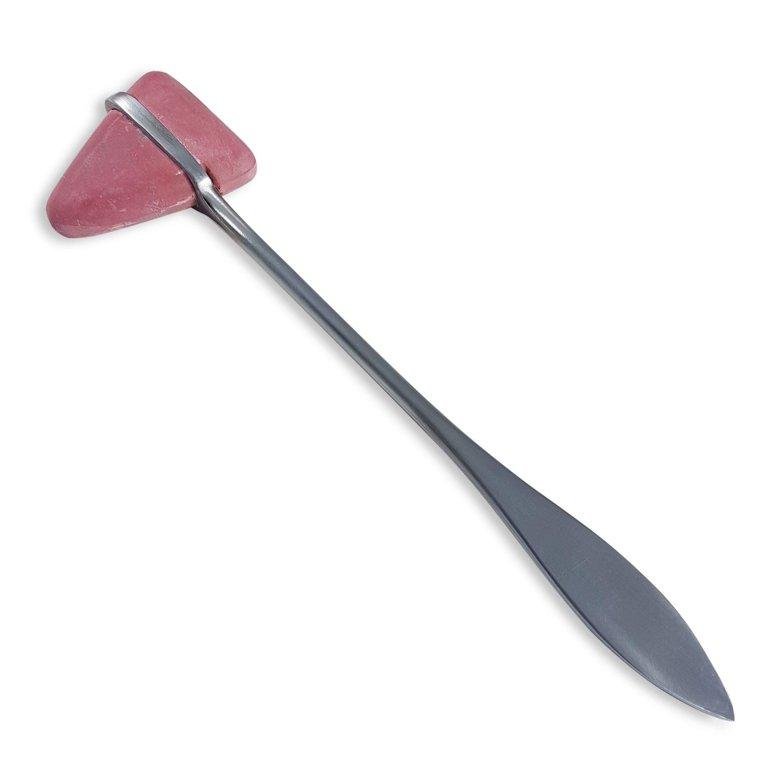
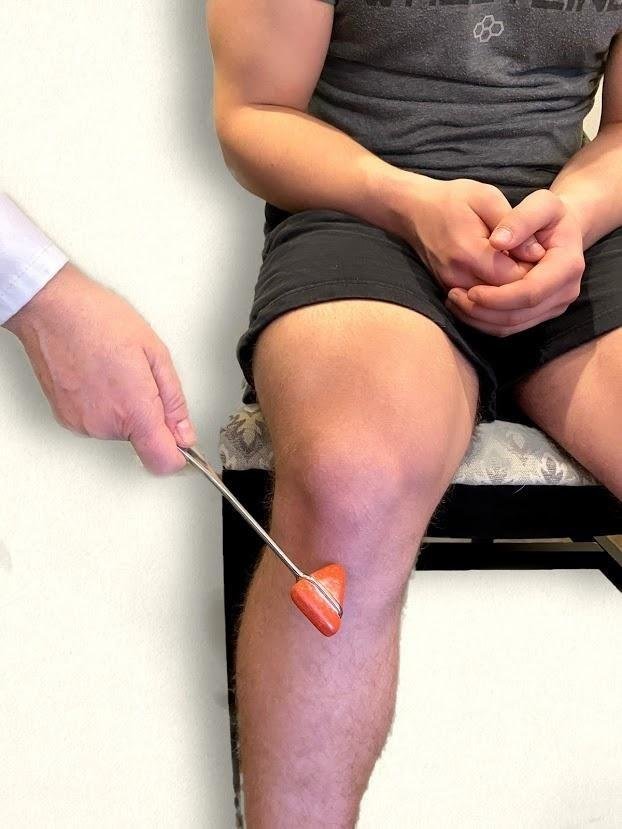
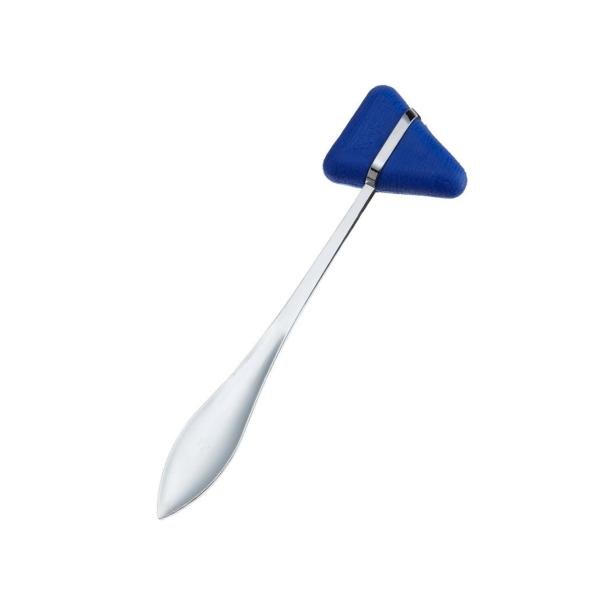
The Taylor-type design is commonly associated with a triangular or flat rubber striking head attached to a handle.
The striking surface is intended to provide a controlled impact during tendon-reflex examination.
Depending on the exact product design, variations may include differences in:
- Head dimensions
- Handle length
- Handle material
- Head material
- Weight
- Surface finish
- Overall shape
Key Product Features
🔺 1. Triangular Striking Head
The distinctive triangular head provides a defined striking surface for clinical examination.
Its shape is characteristic of Taylor-style neurological reflex hammers.
🦵 2. Patellar Reflex Examination
The instrument can be used by trained clinicians during examination of the patellar tendon reflex.
The clinician typically uses controlled percussion while observing the resulting lower-leg movement.
🧠 3. Neurological Assessment
Reflex testing can form part of a broader neurological examination.
Healthcare professionals may assess reflexes alongside:
- Muscle strength
- Sensation
- Coordination
- Muscle tone
- Gait
- Cranial nerve function
- Other neurological findings
A reflex hammer alone cannot diagnose a neurological condition.
✋ 4. Ergonomic Handle
A properly designed handle provides a comfortable grip and allows the clinician to control the percussion force during examination.
🩺 5. Compact Clinical Instrument
The lightweight handheld format makes the instrument convenient for:
- Examination rooms
- Medical clinics
- Hospitals
- Teaching facilities
- Neurology departments
- Physiotherapy practices
- Medical training programs
Common Clinical Applications
A reflex hammer may be used as part of examinations involving:
- Patellar reflex
- Achilles reflex
- Biceps reflex
- Triceps reflex
- Other clinically appropriate tendon reflexes
The specific examination technique should be performed by an appropriately trained healthcare professional.
Why Reflex Testing Matters
Deep tendon reflexes provide information about the function of parts of the neurological system, including sensory pathways, motor pathways, peripheral nerves, spinal cord segments, and related structures.
Clinicians may compare reflex responses between sides of the body and interpret them together with the patient’s history and other examination findings.
An abnormal reflex response does not by itself establish a diagnosis.
Medical Education & Training
Reflex hammers are also useful in medical education.
Students and trainees can learn:
- Basic neurological examination techniques
- Tendon-reflex testing
- Appropriate hammer positioning
- Controlled percussion
- Reflex grading
- Comparison of left and right sides
- Clinical documentation
Practical examination should be performed under appropriate professional instruction.
Product Design Considerations
For medical distributors and institutional buyers, several characteristics can influence product selection.
Handle
A well-balanced handle can make controlled examination easier.
Striking Head
The striking head should be securely attached and have a suitable examination surface.
Weight
Appropriate weight contributes to predictable handling and percussion.
Materials
Materials should be durable and suitable for repeated clinical use.
Surface Finish
Smooth, properly finished surfaces can facilitate cleaning and routine maintenance.
Cleaning & Maintenance
The appropriate cleaning method depends on the materials and manufacturer’s instructions.
For reusable instruments:
- Follow the manufacturer’s cleaning instructions.
- Clean the instrument after use as required by facility procedures.
- Use compatible disinfectants where applicable.
- Avoid chemicals that may damage rubber, plastics, or metal components.
- Inspect the striking head and handle regularly.
- Remove damaged instruments from clinical use.
Do not assume that a standard reflex hammer is suitable for sterilization by autoclave unless the manufacturer specifically states that it is.
Wholesale & OEM Opportunities
The Taylor-type reflex hammer can be suitable for OEM/ODM and private-label medical instrument programs.
Depending on manufacturing capabilities, customization may include:
- Handle materials
- Handle colors
- Logo printing
- Laser engraving
- Custom head designs
- Packaging
- Instruction cards
- Retail boxes
- Medical instrument sets
Custom branding can help distributors create consistent neurological examination product lines.
Wholesale Market Applications
Potential B2B customers include:
- Medical-device wholesalers
- Hospital suppliers
- Neurology equipment distributors
- Clinic suppliers
- Physiotherapy suppliers
- Medical education institutions
- Healthcare retailers
- Medical e-commerce companies
- Private-label medical brands
Quality Control
Before purchasing in bulk, buyers should inspect:
Head attachment: Ensure the striking head is securely fixed.
Handle: Check for cracks, deformation, sharp edges, or manufacturing defects.
Balance: Confirm comfortable handling during clinical examination.
Materials: Verify the specified materials and applicable quality requirements.
Surface: Ensure the product has a smooth and professionally finished surface.
Packaging: Check that individual instruments are adequately protected during transportation.
Regulatory & Documentation Considerations
If the reflex hammer is marketed as a medical device or diagnostic instrument, regulatory requirements depend on the destination market and product classification.
Professional buyers may request:
- Product specifications
- Material information
- Intended-use statement
- Instructions for use
- Quality-control documentation
- Testing reports where applicable
- Regulatory documentation where applicable
- Packaging and labeling information
Claims such as CE certified, medical-grade, clinically proven, or diagnostic-grade should only be made when supported by documentation for the specific product.
The Trigonal Neurological Reflex Patella Hammer / Taylor-Type Reflex Hammer is a compact clinical instrument designed for tendon-reflex assessment during neurological and physical examinations.
Its triangular striking head, ergonomic handle, and portable format make it a practical addition to professional examination equipment used in hospitals, clinics, neurology departments, physiotherapy practices, and medical education facilities.
For medical wholesalers, distributors, and OEM/private-label brands, customization of materials, colors, handles, logos, packaging, and instrument sets can provide opportunities for developing professional neurological examination product ranges.