
Amblyopia Occlusion Eye Patches for Children – Full-Cover Single-Eye Cover for Strabismus & Vision Training
Amblyopia occlusion patches are designed to cover one eye as part of an eye-care professional’s prescribed vision-training or occlusion program. These patches can provide full coverage of the selected eye while allowing the child to continue wearing glasses when the product is designed for spectacle use.
For ophthalmic suppliers, pediatric eye-care distributors, pharmacies, medical wholesalers, and OEM/private-label brands, children’s eye patches can be an important addition to pediatric vision-care product ranges.
What Are Amblyopia Eye Patches?
Amblyopia, commonly called “lazy eye,” is a childhood vision-development condition in which vision develops less effectively in one eye. One established treatment approach is occlusion therapy, in which the better-seeing eye is covered for a prescribed period so the weaker eye is encouraged to work.
An occlusion patch is therefore designed to block vision through one eye while the child performs normal visual activities, according to the treatment plan provided by an eye-care professional.
The appropriate treatment duration and patching schedule should always be determined by a qualified ophthalmologist or optometrist.
Key Product Features
1. Full-Eye Coverage
The full-cover design is intended to block the selected eye effectively when correctly positioned.
Complete coverage is important for products specifically intended for occlusion therapy.
2. Children’s Design
The product is designed for pediatric users and can be incorporated into children’s eye-care routines.
Comfort is particularly important because children may need to wear an eye patch for an extended period according to their treatment plan.
3. Suitable for Vision Training Programs
The patch can be used as part of an eye-care professional’s recommended occlusion program for conditions such as amblyopia.
It should not independently be marketed as a device that “corrects” strabismus or cures vision disorders.
4. Single-Eye Occlusion
The patch covers one eye while leaving the other eye unobstructed.
This design supports prescribed monocular occlusion therapy.
5. Spectacle-Compatible Options
Depending on the specific product design, an eye patch may be placed over the eye or integrated with children’s eyewear.
Buyers should verify the exact product configuration before making claims about compatibility with glasses.
How Occlusion Therapy Works
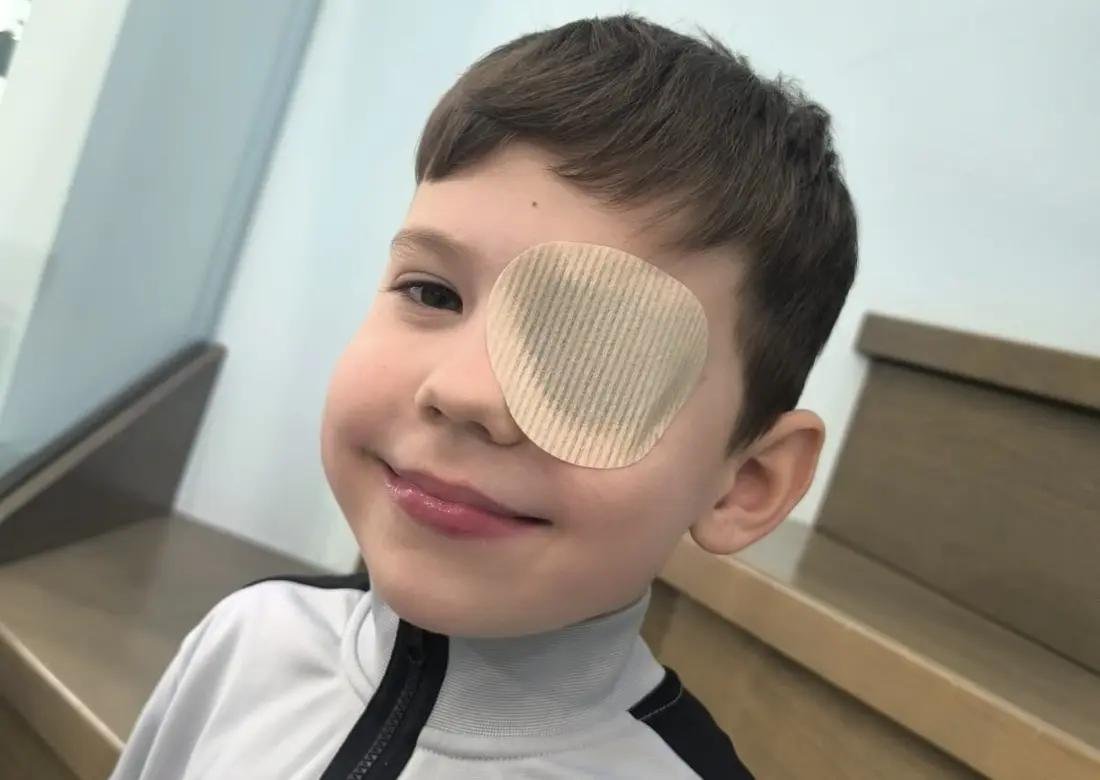
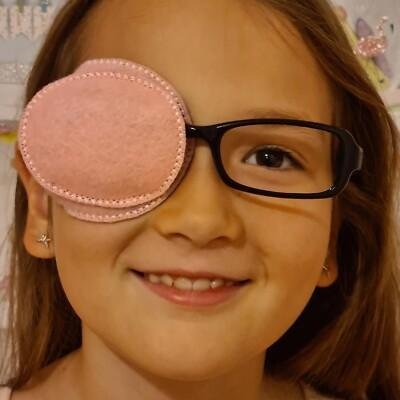
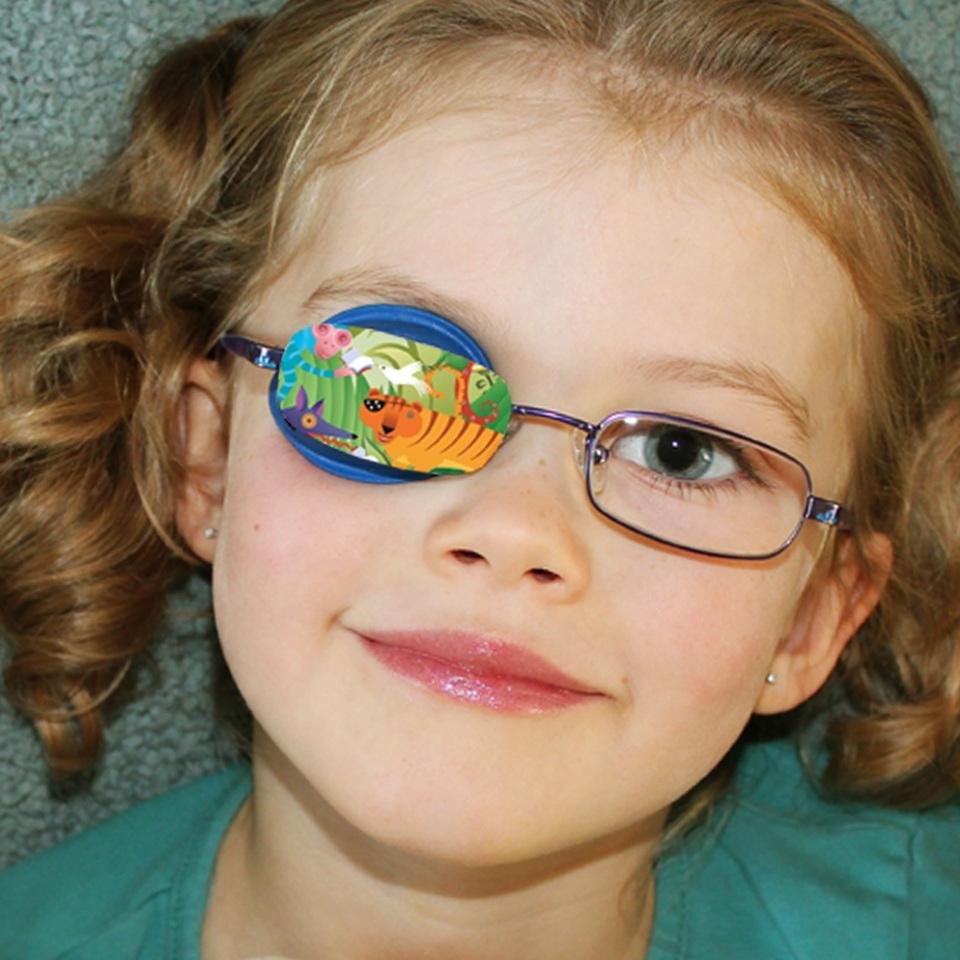
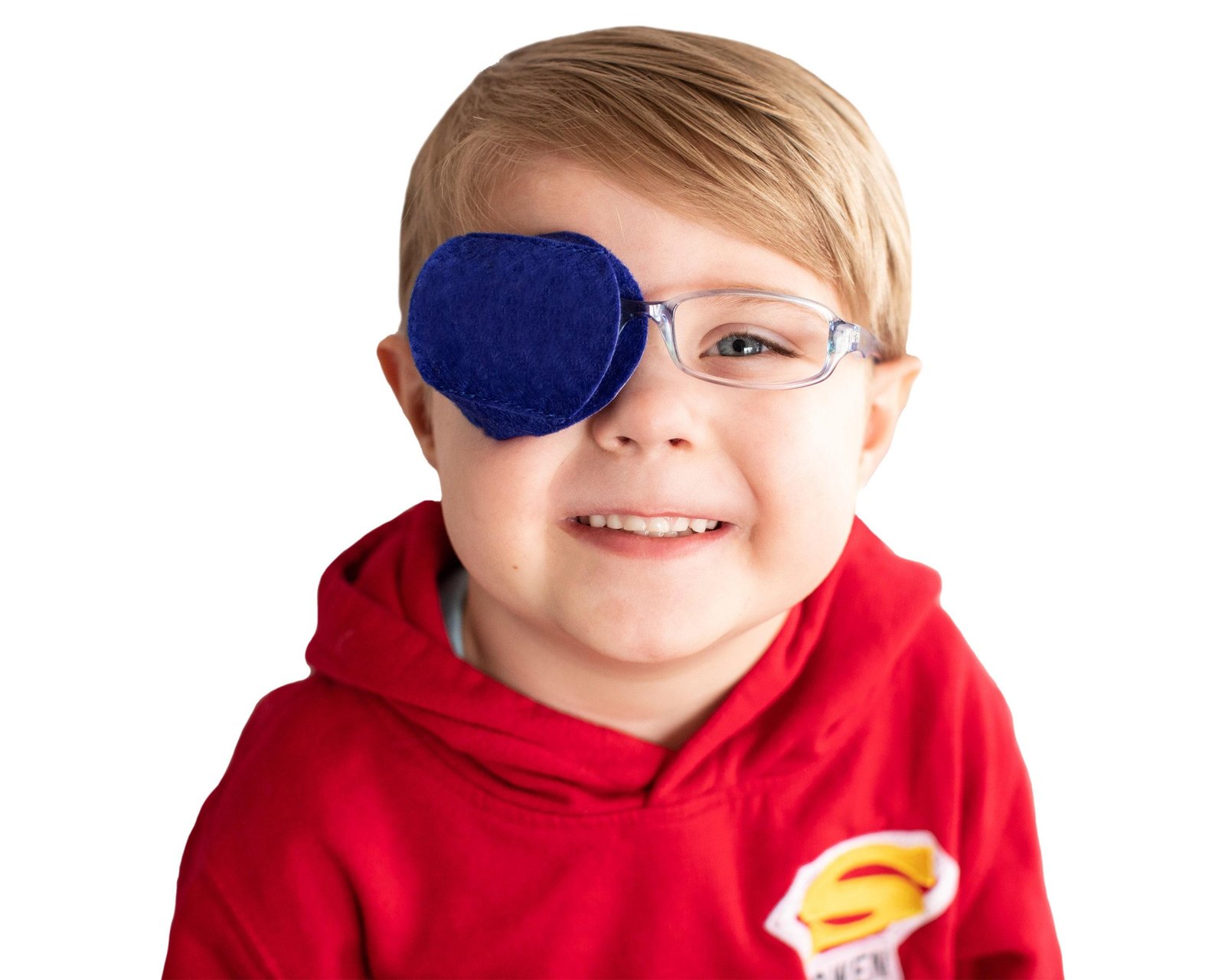
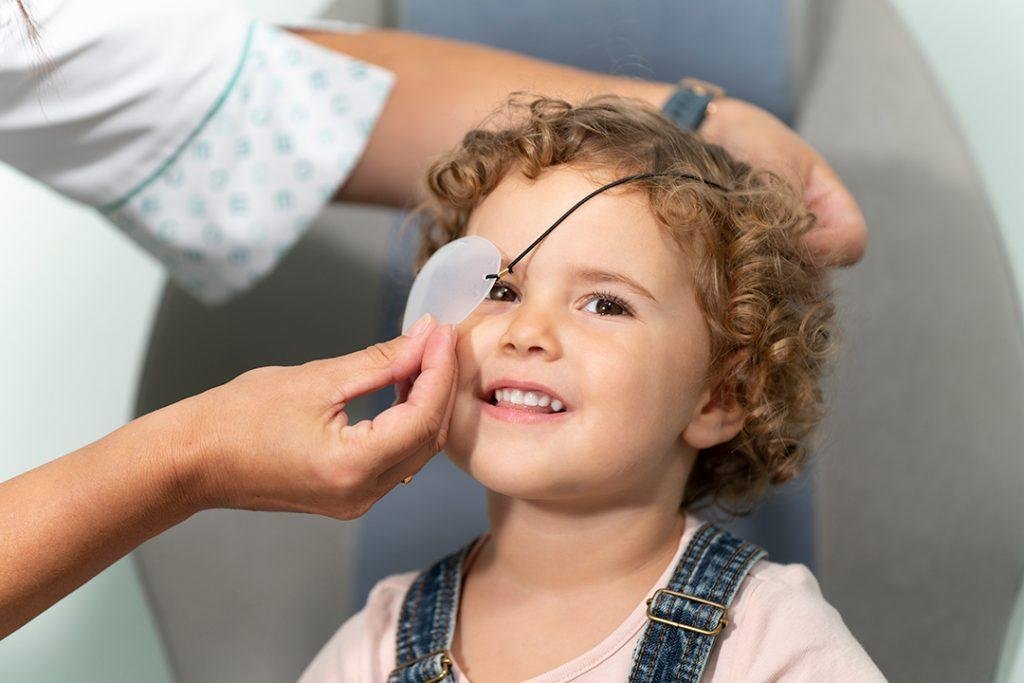
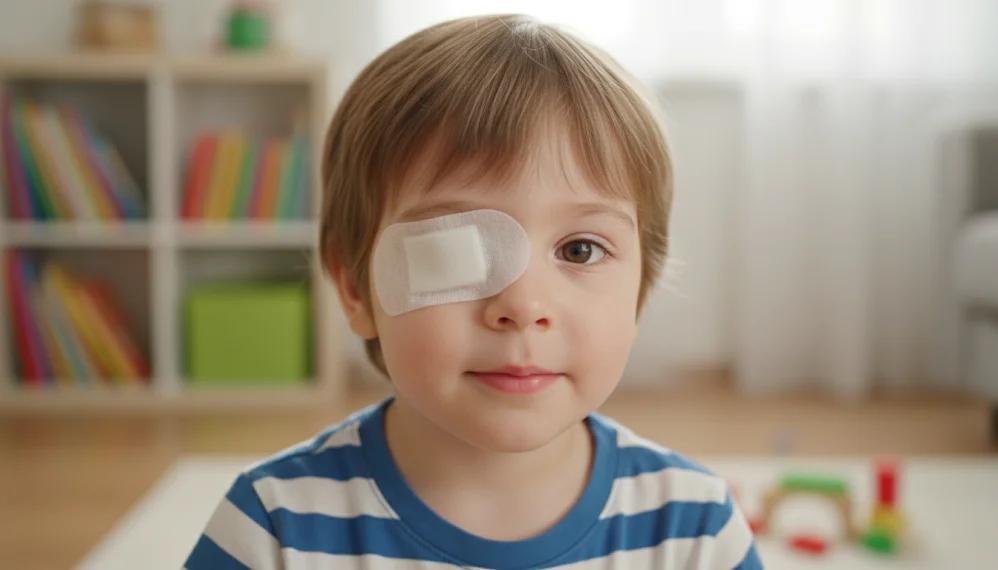
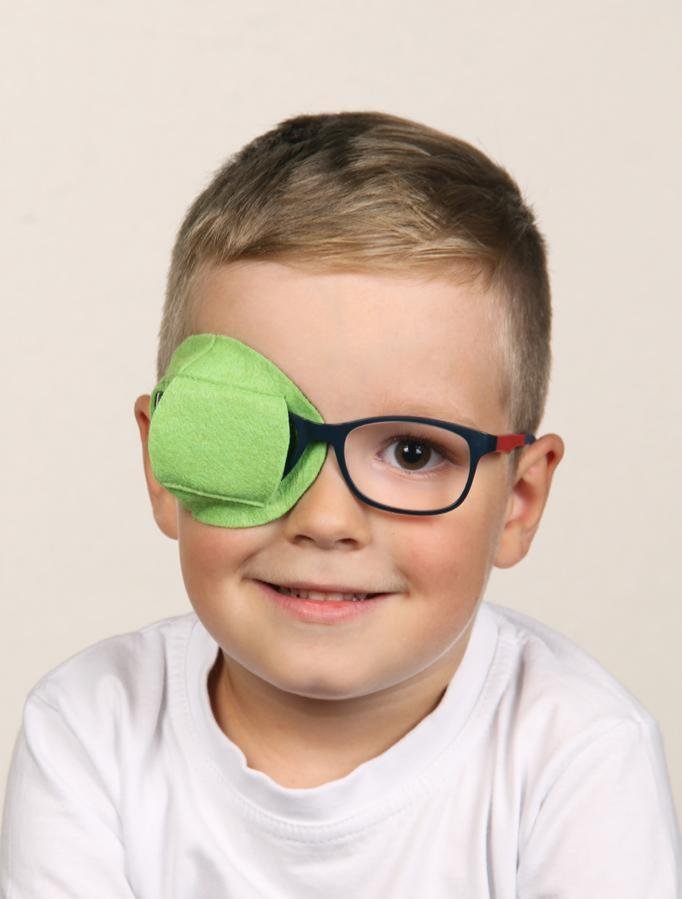
During occlusion therapy, the stronger or better-seeing eye is covered according to a prescribed schedule. This encourages the brain to rely more on the weaker eye.
Treatment can vary considerably between children.
An eye-care professional may determine:
- Which eye should be covered
- How many hours per day
- How long treatment should continue
- Whether glasses are also required
- When vision should be reassessed
Parents and caregivers should follow the prescribed treatment plan rather than selecting patching times independently.
Potential Clinical Applications
Under professional supervision, occlusion patches may be used as part of management for:
- Amblyopia
- Selected childhood visual-development conditions
- Certain cases associated with strabismus
- Vision-training programs prescribed by an eye-care professional
The patch itself does not correct the underlying cause of strabismus or amblyopia. Its role is to provide occlusion as part of a broader treatment plan.
Comfort Matters for Children
Children may be more likely to follow a prescribed patching routine when the product is comfortable and easy to use.
Important design considerations include:
- Soft skin-contact materials
- Appropriate adhesive strength
- Comfortable edges
- Breathability
- Secure positioning
- Easy application and removal
- Child-friendly sizing
The patch should remain securely positioned without causing unnecessary skin irritation.
Skin-Friendly Considerations
Because the patch may remain in contact with delicate skin around the eye, material selection is important.
Manufacturers should evaluate:
- Adhesive properties
- Skin-contact materials
- Irritation potential
- Removal comfort
- Moisture management
- Product cleanliness
If a child develops persistent redness, swelling, rash, or significant skin irritation, caregivers should discontinue use and consult an appropriate healthcare professional.
Choosing the Right Size
Children’s faces vary significantly by age and development.
Wholesale buyers should request detailed sizing information, including:
- Patch length
- Patch width
- Adhesive area
- Eye coverage dimensions
- Recommended age or facial-size range
The patch should provide adequate coverage without unnecessarily extending into uncomfortable areas.
Application Tips
Caregivers should follow the manufacturer’s instructions and the child’s eye-care professional’s treatment plan.
General considerations include:
- Ensure the skin is clean and dry.
- Position the patch correctly over the prescribed eye.
- Ensure the eye is fully occluded where required.
- Check that the patch remains comfortable.
- Remove it according to the manufacturer’s instructions.
- Monitor the skin around the eye.
Do not place adhesive directly onto the eyelid or inside the eye unless the product is specifically designed and labeled for that application.
OEM & Private-Label Opportunities
Pediatric eye patches can be suitable for OEM/ODM and private-label ophthalmic-care brands.
Depending on manufacturing capabilities, customization may include:
- Different sizes
- Different shapes
- Skin-contact materials
- Adhesive specifications
- Children’s patterns
- Custom colors
- Printed designs
- Logo branding
- Retail cards
- Individual packaging
- Custom cartons
Child-friendly graphics and packaging can help make the product more appealing while maintaining professional medical-product presentation.
Wholesale Market Applications
Potential B2B customers include:
- Ophthalmic suppliers
- Pediatric eye-care distributors
- Medical-device wholesalers
- Pharmacies
- Children’s healthcare retailers
- Optometry suppliers
- Hospital suppliers
- E-commerce medical brands
- Rehabilitation suppliers
- Private-label healthcare companies
Quality Control
For bulk purchasing, buyers should evaluate:
Occlusion
Verify that the product provides the intended level of visual coverage.
Adhesive
Check adhesion performance and removal characteristics.
Skin Contact
Evaluate materials for appropriate use around the sensitive eye area.
Shape
Confirm that the patch conforms appropriately to the intended facial area.
Packaging
Individual packaging can help maintain product hygiene and protect the patches during transportation and storage.
Printing
For children’s designs, verify that printed graphics remain clear and stable during normal use.
Regulatory & Documentation Considerations
If marketed as a medical device, the product may be subject to applicable medical-device regulations in the destination market.
Professional buyers should request relevant documentation, such as:
- Product specifications
- Material information
- Intended-use statement
- Adhesive information
- Instructions for use
- Quality-control documentation
- Testing reports where applicable
- Labeling information
- Declaration of Conformity where applicable
Claims such as CE certified, medical-grade, hypoallergenic, or clinically proven should only be made when supported by appropriate documentation for the specific product.
Important Safety Information
Occlusion therapy should be conducted according to the advice of a qualified eye-care professional.
Parents should seek professional advice if a child experiences:
- Significant eye pain
- Eye redness or swelling
- Sudden changes in vision
- Severe skin irritation
- Difficulty seeing with the uncovered eye
- Any unexpected symptoms during treatment
The patch should not be used to self-treat an undiagnosed eye condition.
Amblyopia Occlusion Eye Patches for Children provide a practical way to deliver single-eye occlusion as part of a professionally prescribed vision-treatment program.
Their full-coverage design, pediatric format, comfortable application, and potential spectacle compatibility make them suitable for ophthalmic-care and pediatric vision-support product ranges.
For medical wholesalers, ophthalmic distributors, pharmacies, optometry suppliers, and OEM/private-label brands, the product offers opportunities for customized sizes, materials, children’s designs, packaging, and branding.
Most importantly, the patch should be used according to an eye-care professional’s instructions, because the appropriate eye, duration, and treatment schedule vary from child to child.