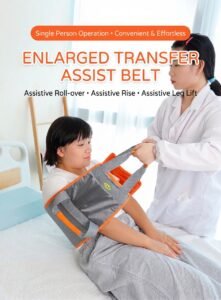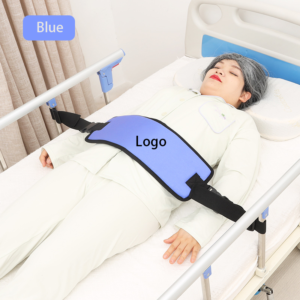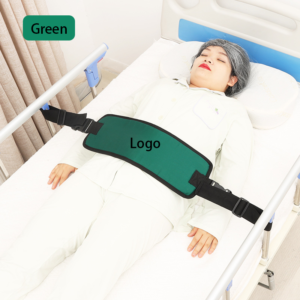
Why the Wrong Transfer Sling Patient Lift Aid Creates More Problems Than It Solves
If you are caring for a parent or spouse at home, a transfer sling patient lift aid is one of the highest-stakes purchases you will make. The wrong sling can slip, cause pressure injuries, or make every transfer a two-person struggle. The right one restores dignity and saves your back. These are the mistakes that fill return bins and review sections—and how to avoid them.
1. Buying Without Checking the Spreader Bar Compatibility
A sling that “looks universal” may not attach securely to your specific lift. Slings connect via loops (which hang on pronged bars) or clips (which snap onto compatible knobs). Before ordering, count the prongs on your lift’s spreader bar and confirm the attachment type. A loop sling on a clip-only bar is a non-starter.
2. Ignoring the Weight Capacity—and the Safety Margin
Most reusable slings list a safe working load between 300 and 500 lbs. But the number matters less than the margin. If your loved one is 280 lbs, a 300-lb sling leaves almost no room for dynamic load during repositioning. Choose a capacity that exceeds the user’s weight by at least 30–40%. Also note that bariatric configurations may require a different sling style entirely, not just a larger size.
3. Guessing the Size Instead of Measuring
Sling sizing is not intuitive. One manufacturer’s “Large” may fit a 47–67 inch shoulder circumference, while another’s “Medium” caps at 57 inches. Measure the user’s shoulder or chest circumference and match it to the specific brand’s chart—not the generic size label. A sling that is too small concentrates pressure at the thighs; one that is too large allows the user to slide down.
4. Using a Mesh Sling for Everything
Mesh slings are excellent for bathing and showering because water drains and air flows. But mesh is not ideal for extended sitting or repositioning on a bed. For routine bed-to-chair transfers and pressure relief, a padded fabric sling distributes weight more evenly. Many home caregivers buy one mesh sling and use it for every task. That works until it doesn’t—typically when the user develops redness at pressure points.
5. Forgetting the Head Support Question
Does your loved one have adequate head and neck control? If not, a standard divided-leg sling may leave the head unsupported during the lift. Look for a sling with a high back or removable head support strip. This is not a comfort upgrade—it is a stability requirement for users with limited trunk control.
6. Skipping the Pre-Use Inspection
Run your hands along every strap before each transfer. Check the stitching, the attachment loops, and the fabric surface. A frayed loop can fail under load. A cracked clip can release mid-lift. Reusable slings are durable, but they are not indestructible. Two minutes of inspection prevents the worst kind of accident.
Bottom line:A transfer sling patient lift aid only works when it matches your lift, your user’s measurements, and your daily routine. Buy for the task you do most often—not the one you imagine you might do someday.