Why the Wrong Support Walking Assistance Transfer Belt Makes Caregiving Harder—Not Safer
If you are caring for a parent or spouse at home, a support walking assistance transfer belt is one of those purchases that seems simple until you get it wrong. The wrong belt slips, digs into fragile skin, or leaves you fumbling with a buckle while your loved one is mid-stand. The right one gives you a secure grip and restores confidence for both of you. These are the mistakes that fill return bins—and how to sidestep them.
1. Buying a Belt Without Handles When You Transfer Solo
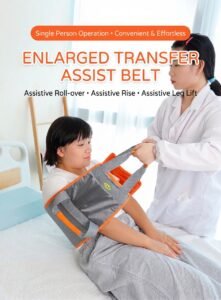
A plain webbing belt without handles requires you to grip the strap itself. That works for trained clinicians, but for a solo home caregiver, handles provide a far more secure hold and reduce wrist strain. Look for vertical handles at the sides and back. If you are the only person doing transfers, handles are not a luxury—they are a safety feature.
2. Choosing a Metal Buckle When You Need One-Handed Operation
Metal buckles are the clinic standard because they lock securely and do not pop open under load. But they require two hands and a bit of practice to fasten. If you are steadying your loved one with one arm, a quick-release plastic clip that snaps shut and pops open with a single press is far more practical. The trade-off: plastic clips are less rugged under sudden shock load. Match the buckle to your actual daily reality, not the hospital catalog.
3. Ignoring Padding When the User Has Fragile Skin or Thin Frame
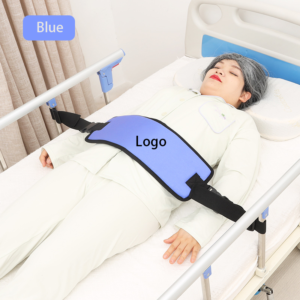
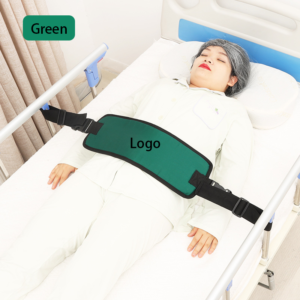
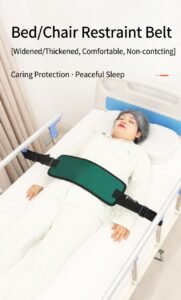
A standard 2-inch webbing belt can bite into thin skin or press against fragile ribs. For a parent with osteoporosis, recent rib injury, or very little natural padding, a wide cushioned band with a soft inner layer disperses pressure across the waist rather than concentrating it on a thin line. The catch is added bulk under clothing. But comfort is not optional when the user winces every time you tighten the belt.
4. Guessing the Fit Instead of Checking the Two-Finger Rule
A properly fitted belt is snug but not tight. The field test: you should be able to slide two fingers between the belt and the person‘s body. If you cannot, it is too tight and restricts breathing. If you can fit a whole hand, it is too loose and will ride up during the transfer. Also: never place the belt directly on bare skin. Always put it over clothing, and add a towel underneath for frail users.
5. Buying a Belt That Cannot Be Washed Properly
Reusable belts accumulate sweat, skin cells, and whatever else daily life brings. Check the wash instructions before you buy. Many cotton webbing belts are machine washable; some padded belts tolerate 60°C washing. If the belt cannot be cleaned easily, it becomes a hygiene problem you will eventually resent.
Bottom line:The best support walking assistance transfer belt for home care is the one that matches your hands, your loved one’s body, and your daily routine. Handles for grip. The right buckle for your grip strength. Padding for comfort. And a fit you can verify in seconds.