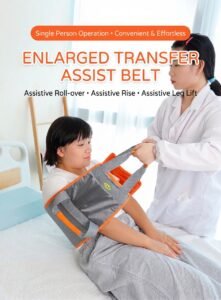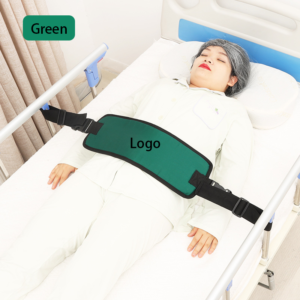
7 Support Walking Assistance Transfer Belt Mistakes That Turn Safety Gear Into a Hazard
You bought the belt. You watched a video. You think you are ready. But the most common transfer belt mistakes are not dramatic—they are small habits that quietly undermine safety until the day they don‘t. Here are the errors caregivers make most often, and the fixes that take seconds to apply.
1. Placing the Belt Directly on Bare Skin
Always put the belt over clothing. Bare skin creates friction, pinching, and abrasion during movement. For frail users with thin skin, add a small towel between the clothing and the belt before tightening. This is not overkill—it is basic skin protection.
2. Tightening Until the User Cannot Breathe
A belt should be snug, not tight. The universal test: you should be able to slide two fingers between the belt and the person’s body. If you cannot, loosen it. If you can fit a whole hand, tighten it. A belt that is too tight restricts breathing and causes the user to tense up, which makes the transfer harder for both of you.
3. Gripping the Belt From the Front Instead of the Handles
If your belt has handles, use them. Gripping the webbing itself puts your wrist at an awkward angle and gives you less control. From behind the patient, hold the back handles with your fingers pointing up and your grip secure. If the user needs extra support, use your second hand on a side handle—not on the strap.
4. Twisting Your Body During the Transfer
The belt protects the user. It does not protect your back if you twist while lifting. Face the direction of movement. Bend your knees, keep your back straight, and use your legs to power the transfer. Do not rotate your torso while holding the belt. If the transfer requires a turn, reposition your feet first.
5. Using the Belt on a User Who Cannot Bear Weight at All
A gait or transfer belt is designed for users who are partially dependent and have some weight-bearing capacity. If your loved one cannot support any weight through their legs, a belt is not the right tool—a mechanical lift is. Using a belt on a non-weight-bearing user risks both of you falling. Know the difference before you wrap the belt.
6. Ignoring the Belt’s Condition
Run your hands along the webbing before every use. Check the stitching, the buckle teeth, and the handle attachment points. A frayed strap or a cracked buckle can fail under load with no warning. Replace any belt that shows obvious wear—do not attempt repairs, even if they seem simple.
7. Forgetting the Belt Comes Off After the Transfer
A transfer belt is for transfers and assisted walking. It is not a restraint. When the walk or transfer is done, remove the belt. Leaving it on during rest or sitting creates pressure points and discomfort. The belt is a tool, not a garment.
The Fix That Takes Five Seconds:Before every single transfer, ask yourself three questions: Is the belt over clothing? Can I fit two fingers under it? Am I gripping a handle, not the strap? Those three checks prevent the most common errors.