《Hemostatic Bandage: The Ultimate Solution for Severe Bleeding Control》

In any emergency situation, controlling severe bleeding is the top priority. Without effective hemorrhage control, even minor wounds can quickly become life-threatening. A Hemostatic Bandage like the Israeli Trauma Bandage is designed to stop bleeding quickly and effectively, making it a must-have in any first aid kit, especially for those facing high-risk environments.

What is a Hemostatic Bandage?

A Hemostatic Bandage is a specially designed bandage that aids in the quick and effective control of bleeding. Unlike traditional bandages that merely cover the wound, hemostatic bandages are infused with substances that actively promote clotting and help control blood loss. The Israeli Trauma Bandage, often used as a Hemostatic Bandage, is one of the most reliable tools for this purpose, combining pressure application with advanced clotting agents to provide optimal results.

Why You Need a Hemostatic Bandage

  1. Fast and Efficient Bleeding Control When a person is injured and bleeding heavily, the seconds matter. The Hemostatic Bandage is designed to work quickly, stopping blood flow and preventing the risk of hemorrhagic shock. The bandage’s built-in pressure applicator ensures consistent and effective pressure is applied to the wound, while its hemostatic properties actively accelerate clot formation, which is essential in controlling bleeding.
  2. Prevents Complications from Severe Bleeding The most dangerous aspect of significant trauma is the rapid loss of blood. If left unchecked, blood loss can lead to shock, organ failure, and death. The Hemostatic Bandage offers immediate action, providing a reliable solution to stop blood flow and prevent these complications from arising.
  3. Versatile for Various Types of Wounds Whether it’s a gunshot wound, stab wound, or accident-related trauma, the Hemostatic Bandage is versatile enough to handle various types of bleeding injuries. It’s used widely in military operations, emergency medical response, and high-risk outdoor activities, ensuring that it can address a broad spectrum of injuries.
  4. Lightweight and Portable The compact and lightweight design of the Hemostatic Bandage makes it easy to carry, whether you’re on a hike, in a tactical operation, or in a remote area. It fits easily into any first aid kit, backpack, or military gear, ensuring that you have it when you need it most.

How Does the Hemostatic Bandage Work?

The Hemostatic Bandage works by combining the pressure of traditional bandages with hemostatic agents—materials that help blood to clot. Here’s a breakdown of how it functions:

  • Pressure Application: The bandage features an integrated pressure applicator that helps stop bleeding by directly applying sustained pressure to the wound. This is key in controlling blood flow and minimizing blood loss.
  • Clotting Agents: Hemostatic agents within the bandage promote faster clot formation, ensuring that the body’s natural healing process begins immediately. These agents help to accelerate the coagulation process, which is critical for halting major bleeding.

The combination of pressure and clotting agents makes this bandage highly effective in treating a wide variety of severe injuries, from lacerations to gunshot wounds.

Why is the Hemostatic Bandage Crucial for Emergency Care?

In emergency care, particularly in situations where quick response is necessary, a Hemostatic Bandage is vital. The Israeli Trauma Bandage, as an example, is widely used by military personnel, emergency responders, and medical teams because it allows for quick control of bleeding, reducing the time required to treat trauma injuries.

Here’s why it’s indispensable:

  • Time-Sensitive Emergency Care: The quicker bleeding is controlled, the better the outcome. The Hemostatic Bandage allows responders to control bleeding on-site, offering the patient a better chance for survival.
  • Portable and Easy to Use: Unlike traditional methods, such as gauze or bandages, that may require multiple steps or additional tools, the Hemostatic Bandage can be applied in a matter of minutes with minimal training. Its straightforward application ensures effective care in any situation.
  • Reduces the Risk of Shock: By controlling blood loss immediately, the Hemostatic Bandage helps reduce the risk of shock, which is a significant cause of death in trauma cases. Reducing the likelihood of shock can improve the chances of recovery and survival.

Real-World Use: Who Needs a Hemostatic Bandage?

The Hemostatic Bandage is not only for medical professionals—anyone in a high-risk environment can benefit from having one in their first aid kit. Below are some key areas where this life-saving tool is essential:

  • Military and Tactical Operations: Military personnel often encounter traumatic injuries in combat situations. The Israeli Trauma Bandage, a highly trusted Hemostatic Bandage, is used by soldiers worldwide to stabilize injuries in the field and reduce the risk of life-threatening blood loss.
  • First Responders and Emergency Medical Teams: Paramedics and emergency responders use Hemostatic Bandages to treat patients with severe bleeding before they can be transported to a hospital. This immediate response is essential in critical situations where every second counts.
  • Outdoor Activities and Adventures: Adventurers, hikers, and outdoor enthusiasts often encounter situations where access to immediate medical care is not possible. Having a Hemostatic Bandage in their first aid kit ensures they can treat severe bleeding injuries until they can get help.

Order Your Hemostatic Bandage Today and Be Prepared for Anything

Don’t wait until an emergency occurs to realize you’re unprepared. The Hemostatic Bandage could be the difference between life and death in severe bleeding situations. Order yours today and ensure you have this essential tool at hand when you need it most.

Visit our website now to purchase the Israeli Trauma Bandage and take advantage of our limited-time discount. Prepare yourself and your loved ones for any emergency—be ready to save a life with a reliable Hemostatic Bandage.
RELATED POSTS

Master Medical | Leg-Lifting Assist Strap: Rigid vs Soft vs Thigh Lifter Compared

Leg-Lifting Assist Strap: Rigid vs Soft vs Thigh Lifter Compared

Leg-Lifting Assist Strap Types Explained: Which Design Actually Works for Your Situation? Not all leg lifters are the same product with different colors. There are three distinct designs on the market, and they solve different problems. Buying the wrong type means the device sits in a drawer while you continue to struggle. Here is how to match the design to the user. Type 1: Rigid Leg Lifter (Stiffened Stem or Metal Core) This is the most common design for post-surgical and elderly users. A stiffened rod or metal strip runs along the length of the strap, keeping the foot loop open and rigid. You slide your foot into the loop without bending, then use the handles or wrist loop to lift. Strengths:The foot loop stays open, which means no lassoing, no bending, and no frustration. The rigid stem gives directional control—you can guide the leg precisely where you want it. One long-term user with neuronal damage described the difference: “The semi-rigid central ‘core’ makes it better than the all-fabric type I had been using and gives me more control positioning the leg where I want it to go” . Weaknesses:Rigid lifters are bulkier than soft straps and cannot be folded

Read More »
Master Medical | Leg-Lifting Assist Strap for Elderly: Reclaim Independence in 4 Places

Leg-Lifting Assist Strap for Elderly: Reclaim Independence in 4 Places

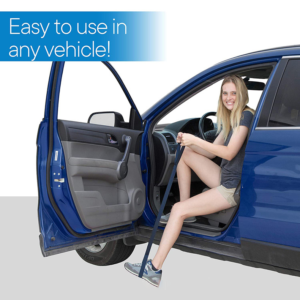
Where a Leg-Lifting Assist Strap Actually Gets Used (It’s Not Just the Bed) Search for leg lifters and the photos all look the same: someone sitting on the edge of a bed, strap looped around their foot. That is one use case. It is not the only one—and for many elderly users, it is not even the most valuable one. Here is where a leg-lifting assist strap actually earns its place in daily life. 1. The Car: The Transfer Nobody Talks About Getting into a car is mechanically harder than getting into bed. The seat is often higher or lower, the door frame restricts your movement, and you cannot use your body weight the same way. For elderly users with leg weakness or stiffness, the car becomes a source of dread—or a reason to stop going anywhere. A leg lifter changes that. You sit on the seat, loop the strap under your foot, and use your arms to lift and guide the leg into the footwell. One user with lymphedema described using it specifically for her son‘s car, which was higher off the ground: “The leg lifter is a great aid, to helping get into the car… It is not

Read More »
Master Medical | Leg-Lifting Assist Strap for Elderly: 5 Reasons It’s Essential After Knee Surgery

Leg-Lifting Assist Strap for Elderly: 5 Reasons It’s Essential After Knee Surgery

Why a Leg-Lifting Assist Strap Becomes Non-Negotiable After Knee or Hip Surgery The first week after a total knee replacement is a lesson in humility. Your leg feels like it weighs fifty pounds, and the simple act of lifting it onto the bed becomes a two-person job—or an impossible one if you live alone. A leg-lifting assist strap for the elderly is not a luxury item. For post-surgical patients, it is the difference between independence and calling for help at 2 a.m. 1. Your Quadriceps Have Forgotten How to Work After knee surgery, the quadriceps muscle often shuts down temporarily. This phenomenon—sometimes called arthrogenic muscle inhibition—means you physically cannot lift your own leg, even if you want to. A leg lifter strap bypasses the problem entirely: you use your arms to lift the strap, and the strap lifts your leg. One knee replacement patient described it bluntly: “Right after surgery your knee will be so sore you won‘t be able to lift it to get into bed… This basic lifter was a god send” . 2. Hip Replacement Protocols Restrict the Exact Movement You Need Hip replacement patients face a different constraint. The standard posterior approach prohibits bending the hip

Read More »

Shoulder Restraint vs Shoulder Immobilizer: What Buyers Get Wrong

Shoulder Restraint vs Shoulder Immobilizer: Two Devices, Two Completely Different Purposes Search for “shoulder restraint” on Google or Amazon and you will find hundreds of results for arm slings, rotator cuff supports, and post-surgery shoulder immobilizers. Those products are not restraints. Confusing the two wastes money and, in a care context, creates a false sense of safety. Here is the distinction that matters. What a Shoulder Immobilizer Actually Does A shoulder immobilizer is a rehabilitation device. It supports an injured arm and shoulder after surgery, dislocation, or fracture, keeping the joint in a protected position while it heals. The MSD Manual describes the standard technique: the elbow is held at 90 degrees, the arm is supported in a sling, and an elastic bandage may be wrapped around the torso to limit rotation . The goal is healing, not behavior management. Immobilizers are designed for cooperative patients. A person wearing one can, if they choose, remove it or move in ways that compromise the repair. The device assumes the user wants to protect the injury. What a Shoulder Restraint Actually Does A shoulder restraint is a safety device. It limits upper-body movement to prevent a person from rising unassisted, sliding forward

Read More »
Master Medical | Shoulder Restraint Safety: 7 Rules Every Caregiver Must Follow

Shoulder Restraint Safety: 7 Rules Every Caregiver Must Follow

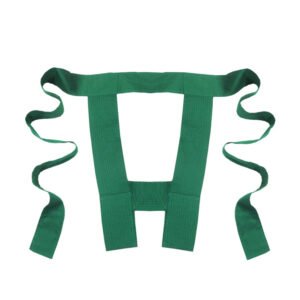
7 Shoulder Restraint Safety Rules That Separate Care From Harm A shoulder restraint is a tool with a narrow margin between safety and harm. The same device that prevents a fall can cause a pressure injury, restrict breathing, or become a hazard in an emergency. The difference is not the product—it is the routine. These are the rules that experienced caregivers follow without exception. 1. Verify the Prescription or Care Plan First A shoulder restraint is not a decision a caregiver makes alone. In facility settings, restraints require a physician‘s order, a documented rationale, and a care plan review. In home care, the decision should involve the patient’s clinician, especially if the patient has cognitive impairment or is on medications that affect alertness. If no one has formally assessed whether the restraint is appropriate, do not apply it. 2. Fit Over Clothing—Never on Bare Skin Straps should always sit over clothing, with a soft layer between the device and the skin. If the patient‘s clothing is thin or the strap is narrow, add a padded sleeve or a folded cloth. Before each use, check that the strap is not twisted and that it lies flat. A twisted strap concentrates pressure

Read More »
Master Medical | Shoulder Restraint for Elderly Care: 6 Buying Mistakes to Avoid

Shoulder Restraint for Elderly Care: 6 Buying Mistakes to Avoid

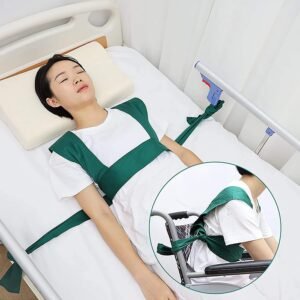
Shoulder Restraint Types Explained: Which Configuration Fits Your Care Setting? Shoulder restraints are not one product category. A strap system that anchors to a bed frame solves a different problem than a wheelchair-mounted restraint or a vest-style device. Choosing the wrong type wastes money and creates a false sense of security. Here is how to match the configuration to the situation. Bed-Anchor Shoulder Restraints: Fall Prevention for Lying Patients These devices typically consist of a chest or shoulder strap system that connects to the bed frame, limiting the patient’s ability to sit up or swing their legs over the edge. The anchor point is critical: it must be a fixed part of the bed that does not move when the patient pulls. Who it fits:Patients who attempt to rise unassisted from bed, particularly those with dementia, agitation, or post-surgical confusion. The restraint allows turning and repositioning while preventing the dangerous sit-up-and-stand motion. Who should skip it:Patients who are primarily in a wheelchair during waking hours. A bed-anchor system is useless once the patient is transferred. Wheelchair-Configured Shoulder Restraints: Safety During Seated Transport and Daily Sitting Wheelchair restraints route the shoulder strap around the chair frame rather than a bed. Some

Read More »

Bed Ladder Assist With Handle Rope: 5 Recovery Scenarios

Why a Bed Ladder Assist With Handle Rope Becomes Essential After Surgery—and for Daily Independence The moment you cannot sit up in bed without help is the moment you realize how much independence depends on a simple movement. A bed ladder assist with handle rope is a low-tech solution: a strap anchored to the bed frame, with padded grips the user pulls to rise to a seated position. But its value is not just mechanical. For the right user, it restores control during a period when control feels scarce. Scenario 1: Abdominal Surgery Recovery After abdominal surgery, the core muscles that initiate a sit-up are compromised. Pushing up with the arms alone strains the incision site. A bed ladder allows the user to pull with the arms while keeping the torso relatively stable. One user who had emergency abdominal surgery and lived alone wrote: “This small genius product kept me from staying in the hospital even longer because it gave me independence” . Another reviewer described it as “awesome for post ovarian cyst surgery” with “sturdy” construction and handles that “have good grip” . Scenario 2: Hip Replacement and Lower Extremity Weakness Hip replacement protocols often restrict the deep hip

Read More »
Master Medical | Bed Ladder Assist With Handle Rope: Install It Right in 5 Steps

Bed Ladder Assist With Handle Rope: Install It Right in 5 Steps

How to Install a Bed Ladder Assist With Handle Rope So It Actually Stays Put The number one reason a bed ladder assist fails is not the product—it is the installation. A ladder anchored to a loose leg, draped without tension, or adjusted to the wrong height will shift under load. That shift is the difference between a safe sit-up and a fall. This guide covers the five-step installation process and the bed types that require extra attention. Step 1: Identify a Fixed Anchor Point The ladder must attach to a part of the bed that does not move when the user pulls. On a traditional bed frame, the legs at the foot of the bed are the standard anchor point . Loop the strap around the leg, thread it through the buckle, and pull tight. What if there is no frame leg? Platform beds, divans, and beds on solid bases are the most common compatibility complaint. One buyer with a plywood base bed “had to manufacture attachment points and screw them to the bottom of the plywood” . Another strapped the ladder to the slats under the mattress with success . The key is a point that will not

Read More »
Master Medical | Bed Ladder Assist With Handle Rope: 5 Buying Mistakes to Avoid

Bed Ladder Assist With Handle Rope: 5 Buying Mistakes to Avoid

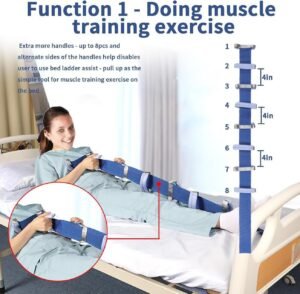
Bed Ladder Assist With Handle Rope: What Real Buyers Praise, What They Regret Product listings show the device in ideal lighting. Buyer reviews show what happens after three weeks of nightly use. We read through the recurring themes in feedback for bed ladder assist devices with handle ropes—the features users love, the defects that cause returns, and the practical checks that separate a daily-use tool from a return-bin item. What Buyers Consistently Love 1. It restores independence without permanent installation. The most repeated theme across reviews is the psychological value of self-reliance. One user with MS put it plainly: “I live alone and this will keep me safe for those unexpected moments. I was considering a bed rail but that would be really annoying and cumbersome. This is way cheaper and if I don‘t want to use it I can stick it in a drawer” . A bed rail is furniture. A ladder rope is a tool you can put away. 2. Padded EVA foam handles make the device usable for people with hand weakness. The Vive model uses three 5-inch EVA foam handles spaced 10.5 inches apart . Reviews from users with arthritis and neuropathy consistently report that the

Read More »
test

3 Handle Bed Ladder Assist: 5 Recovery Scenarios It Solves

Why a 3 Handle Strap Pull Up Assist Device Becomes Essential After Surgery—and for Daily Independence The moment you cannot sit up in bed without help is the moment you realize how much independence depends on a simple movement. A 3 handle bed ladder assist is a low-tech solution: a strap anchored to the bed frame, with three padded grips the user pulls to rise to a seated position. But its value is not just mechanical. For the right user, it restores control during a period when control feels scarce. Scenario 1: Abdominal Surgery Recovery After abdominal surgery, the core muscles that initiate a sit-up are compromised. Pushing up with the arms alone strains the incision site. A bed ladder allows the user to pull with the arms while keeping the torso relatively stable. One reviewer described it directly: “Awesome for post ovarian cyst surgery! Easy to attach to bed. Sturdy and handles have good grip” . Another wrote: “I got it due to a recent abdominal surgery but will keep it attached to my bed due to a bad back” . Why the third handle matters here:The intermediate grip point allows the user to pull in smaller increments, reducing the sudden

Read More »

Submit Your Sourcing Request

Please complete the form below and our customer support team will be in touch with you shortly. Inquiries submitted through this form will receive priority processing over emails.