Where a Leg-Lifting Assist Strap Actually Gets Used (It’s Not Just the Bed)
Search for leg lifters and the photos all look the same: someone sitting on the edge of a bed, strap looped around their foot. That is one use case. It is not the only one—and for many elderly users, it is not even the most valuable one. Here is where a leg-lifting assist strap actually earns its place in daily life.
1. The Car: The Transfer Nobody Talks About
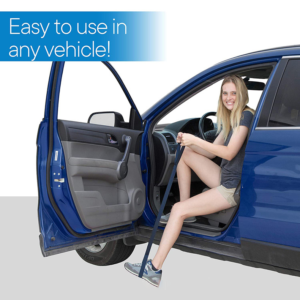
Getting into a car is mechanically harder than getting into bed. The seat is often higher or lower, the door frame restricts your movement, and you cannot use your body weight the same way. For elderly users with leg weakness or stiffness, the car becomes a source of dread—or a reason to stop going anywhere.
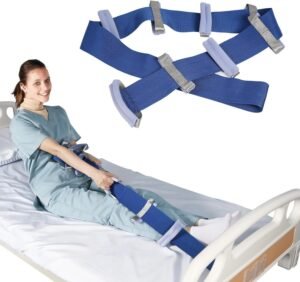
A leg lifter changes that. You sit on the seat, loop the strap under your foot, and use your arms to lift and guide the leg into the footwell. One user with lymphedema described using it specifically for her son‘s car, which was higher off the ground: “The leg lifter is a great aid, to helping get into the car… It is not anywhere near as bulky as it looks” . Another bought a second unit explicitly to leave in the car .
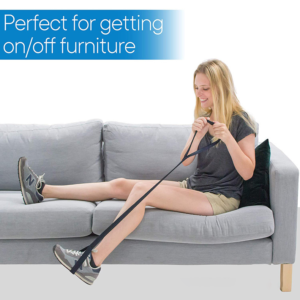
2. The Sofa and Recliner: The Everyday Comfort Problem
Beds and cars get the attention, but sofas and recliners are where elderly users spend hours. Lifting a stiff leg onto an ottoman or reclining footrest requires the same quadriceps function that fails after surgery or with chronic conditions. A leg lifter lets you position your leg without calling for assistance—and without the awkward pause while you wait for someone to notice.
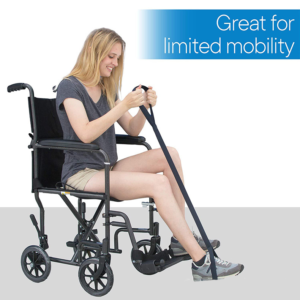
3. The Wheelchair and Scooter: Maintaining Seated Alignment
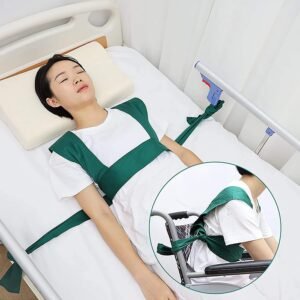
For users who spend significant time in a wheelchair or mobility scooter, leg position affects comfort, circulation, and skin integrity. A leg lifter helps reposition the leg when it slips off the footplate or when the user needs to shift position. It is a small function, but it reduces the frequency of caregiver calls for minor adjustments.
4. The Bed: Turning, Not Just Lifting
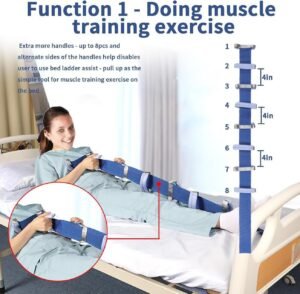
The standard leg lifter use case is getting legs into bed. But users with back pain and limited trunk control also use it to turn over and reposition during the night. One reviewer described using the lifter when “getting in bed from a seated position as well as to get backwards farther in recliner” . The strap becomes a general repositioning tool, not just a transfer aid.
The Feature That Makes Multi-Scenario Use Possible: Portability
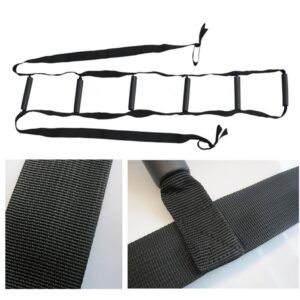
A leg lifter that stays in one room is half a solution. The best models for daily independence are lightweight and compact enough to carry or store discreetly. One user noted the lifter “is not anywhere near as bulky as it looks so can be easily carried in a shoulder bag or even in a pocket” . A second unit for the car eliminates the need to remember to bring it—a practical solution for users who are already managing enough.
Who Benefits Most (Beyond Post-Surgery):While knee and hip replacement patients are the most visible users, leg lifters also serve people with arthritis, neuropathy, multiple sclerosis, lymphedema, and general age-related leg weakness. The common thread is not a specific diagnosis—it is the inability to lift a leg without using the arms.
Bottom line:A leg-lifting assist strap for the elderly is not a single-purpose medical gadget. It is a portable independence tool. Buy one for the bed, buy a second for the car, and stop waiting for someone to lift your leg.