Shoulder Restraint Types Explained: Which Configuration Fits Your Care Setting?
Shoulder restraints are not one product category. A strap system that anchors to a bed frame solves a different problem than a wheelchair-mounted restraint or a vest-style device. Choosing the wrong type wastes money and creates a false sense of security. Here is how to match the configuration to the situation.
Bed-Anchor Shoulder Restraints: Fall Prevention for Lying Patients
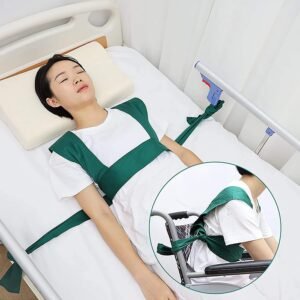
These devices typically consist of a chest or shoulder strap system that connects to the bed frame, limiting the patient’s ability to sit up or swing their legs over the edge. The anchor point is critical: it must be a fixed part of the bed that does not move when the patient pulls.
Who it fits:Patients who attempt to rise unassisted from bed, particularly those with dementia, agitation, or post-surgical confusion. The restraint allows turning and repositioning while preventing the dangerous sit-up-and-stand motion.
Who should skip it:Patients who are primarily in a wheelchair during waking hours. A bed-anchor system is useless once the patient is transferred.
Wheelchair-Configured Shoulder Restraints: Safety During Seated Transport and Daily Sitting
Wheelchair restraints route the shoulder strap around the chair frame rather than a bed. Some systems combine a shoulder component with a lap belt for comprehensive upper-body security. The attachment points must be on the rigid frame, not the armrests or wheels.
Who it fits:Patients who self-propel or attempt to stand from a wheelchair, or who are transported in a vehicle while seated. The restraint prevents forward lunging and sliding.
Who should skip it:Patients who use a wheelchair only for short transfers and have adequate trunk control. Over-restraining a patient with good sitting balance reduces quality of life without a corresponding safety gain.
Vest-Style Upper Body Restraints: Maximum Coverage, Maximum Scrutiny
A vest or jacket-style restraint encloses the torso and distributes restraint forces across a larger area than strap-only systems. The broader surface reduces localized pressure but increases the risk of overheating and makes the device more visible and restrictive-feeling.
Who it fits:Patients with severe agitation who have defeated strap-only systems, or those who require restraint during transport in a moving vehicle where sudden forces are possible.
Who should skip it:Most home care situations. Vests are highly restrictive and should be reserved for clinical or transport settings where lesser alternatives have failed. They also require more careful monitoring for breathing restriction and skin integrity.
The Anchor Question Nobody Asks Until It Fails
Every shoulder restraint depends on its anchor. Bed frames, wheelchair frames, and vehicle tie-downs each have different load characteristics. A strap rated for a static bed anchor may fail under the dynamic forces of a moving vehicle. If the patient will be transported, confirm the restraint is explicitly rated for transport use—not just bed or chair use.
A Simple Decision Framework
-
Patient attempts to rise from bed → Bed-anchor shoulder restraint.
-
Patient attempts to rise from wheelchair → Wheelchair-configured restraint with frame anchor.
-
Patient requires transport in a vehicle → Transport-rated restraint or vest, confirmed by the transport provider.
-
Patient has mild confusion but good sitting balance → Reassess whether a restraint is necessary at all; consider bed/chair alarms as a lower-restriction alternative.
Bottom line:Match the restraint to the furniture and the specific dangerous behavior you are trying to prevent. A bed restraint does not work in a chair. A chair restraint does not work in a van. Buy for the actual setting.