《Future Innovations in Pneumothorax Decompression Needles》

The field of trauma care continues to evolve, and with it, the tools we use to manage critical conditions like tension pneumothorax. The Pneumothorax Decompression Needle is no exception. As medical technology advances, several innovations are expected to enhance its functionality, safety, and ease of use.

1. Needle Design and Ergonomics

One of the most likely areas for improvement is the design of the decompression needle itself. Current designs are effective but could be enhanced for greater precision, comfort, and usability:

  • Ergonomically Improved Handles: Newer models may incorporate better grips or ergonomically designed handles, which could make it easier for emergency responders to perform the procedure in high-stress environments.
  • Automated Needle Deployment: Some manufacturers are exploring designs where the needle is automatically deployed once the correct placement is identified. This could reduce human error and increase the speed and accuracy of insertion.

2. Use of Smart Technology

Like many modern medical devices, smart technology could be integrated into the Pneumothorax Decompression Needle to enhance its functionality:

  • Real-Time Pressure Monitoring: Smart needles equipped with pressure sensors could help medical professionals monitor the air release process in real-time. These sensors could alert practitioners when the pressure has been adequately relieved or when there is a risk of over-decompression.
  • Wireless Connectivity: In future systems, the decompression needle could be linked to wireless monitoring systems that provide continuous feedback to medical teams, ensuring optimal care for the patient. This could be especially valuable in remote or field settings where immediate access to advanced care is limited.

3. Advanced Materials for Better Performance

The materials used in the construction of decompression needles are another area where future innovation could improve their efficacy and safety:

  • Biodegradable Needles: As part of a broader push for sustainability in healthcare, manufacturers might begin producing decompression needles made from biodegradable or eco-friendly materials, reducing the environmental impact of disposable medical devices.
  • Self-Sealing Technology: Some advanced needle models could incorporate self-sealing mechanisms that close up the puncture wound after the needle is removed, further minimizing the risk of infection or re-inflation of the pneumothorax.

4. Needle Extension and Customization

Decompression needles are not one-size-fits-all, particularly when it comes to different body types. The needle length and angle of insertion are critical factors for success in the procedure, and there is potential for more customizable solutions in the future:

  • Adjustable Needle Lengths: New designs could include needles that are adjustable in length, making them more versatile for a wider range of patients, including those with thicker chest walls or obesity.
  • Multi-Function Needles: Advanced needles could integrate multiple functions, such as the ability to decompress the chest and provide airway support or even administer a medication to manage shock.

Training and Simulation Advancements for Pneumothorax Decompression

Proper training is essential for anyone using a Pneumothorax Decompression Needle. Given the urgency and complexity of the procedure, it’s vital that emergency medical personnel, first responders, and even military medical staff are well-prepared to perform the intervention correctly. Future advances in training technologies will help improve the proficiency and speed of these professionals:

1. Virtual Reality (VR) and Augmented Reality (AR)

VR and AR technologies are transforming medical training, and pneumothorax decompression is no exception. These immersive technologies can provide:

  • Realistic Simulations: Trainees can practice the procedure in virtual environments, allowing them to experience different patient scenarios and variations in anatomy. This will help increase proficiency and reduce errors in real-world situations.
  • Real-Time Guidance: AR could overlay vital anatomical markers directly onto the practitioner’s field of view, guiding them through the insertion process with step-by-step instructions and reminders.

2. In-Field and Mobile Training Solutions

In remote or field environments, access to medical training can be limited. To address this, mobile and on-the-go training solutions are emerging:

  • Mobile Apps for First Responders: Medical apps on smartphones or tablets could provide quick-reference guides for decompression procedures, ensuring that emergency responders have the information they need when performing the procedure under pressure.
  • Portable Simulation Kits: Compact simulation kits could be deployed in the field, allowing medical teams to practice needle decompression on a variety of realistic anatomical models. These kits may come equipped with mannequins, realistic chest wall simulators, and step-by-step instructional materials.

Global Impact: Pneumothorax Decompression Needles in Low-Resource Settings

The Pneumothorax Decompression Needle is not just a tool for advanced healthcare facilities but is increasingly used in low-resource settings and emergency environments where medical expertise and equipment may be limited. In these settings, such tools can be lifesaving:

1. Humanitarian Aid and Disaster Relief

In disaster zones, especially those with limited medical facilities or where immediate transport to hospitals is impossible, decompression needles are a crucial part of emergency medical kits used by organizations like the Red Cross, Médecins Sans Frontières (MSF), and World Health Organization (WHO). These needles can be used by field medics or first responders to stabilize patients with pneumothorax until they can be evacuated or transferred to a more advanced healthcare facility.

2. Military Applications

In military settings, the Pneumothorax Decompression Needle is an essential part of a combat medic’s toolkit. Battlefield injuries often involve blunt or penetrating trauma to the chest, leading to tension pneumothorax. Combat medics are trained to use decompression needles in high-stress, high-risk situations to save lives, and advanced field kits designed for military personnel are constantly improving to ensure the most effective care in the harshest conditions.


Conclusion: The Lifesaving Potential of Pneumothorax Decompression Needles

The Pneumothorax Decompression Needle is a critical device in trauma care, designed to relieve the life-threatening pressure caused by tension pneumothorax. While the tool itself is simple, its importance in emergency care cannot be overstated. As the medical community continues to innovate, the future of decompression needles looks promising, with improvements in technology, training, and sustainability that will enhance the effectiveness and accessibility of this essential tool.

As emergency medical services, military personnel, and disaster relief workers continue to use the Pneumothorax Decompression Needle in high-pressure situations, ongoing advancements will ensure that these life-saving tools remain a key part of trauma care for years to come.
RELATED POSTS

Master Medical | Leg-Lifting Assist Strap: Rigid vs Soft vs Thigh Lifter Compared

Leg-Lifting Assist Strap: Rigid vs Soft vs Thigh Lifter Compared

Leg-Lifting Assist Strap Types Explained: Which Design Actually Works for Your Situation? Not all leg lifters are the same product with different colors. There are three distinct designs on the market, and they solve different problems. Buying the wrong type means the device sits in a drawer while you continue to struggle. Here is how to match the design to the user. Type 1: Rigid Leg Lifter (Stiffened Stem or Metal Core) This is the most common design for post-surgical and elderly users. A stiffened rod or metal strip runs along the length of the strap, keeping the foot loop open and rigid. You slide your foot into the loop without bending, then use the handles or wrist loop to lift. Strengths:The foot loop stays open, which means no lassoing, no bending, and no frustration. The rigid stem gives directional control—you can guide the leg precisely where you want it. One long-term user with neuronal damage described the difference: “The semi-rigid central ‘core’ makes it better than the all-fabric type I had been using and gives me more control positioning the leg where I want it to go” . Weaknesses:Rigid lifters are bulkier than soft straps and cannot be folded

Read More »
Master Medical | Leg-Lifting Assist Strap for Elderly: Reclaim Independence in 4 Places

Leg-Lifting Assist Strap for Elderly: Reclaim Independence in 4 Places

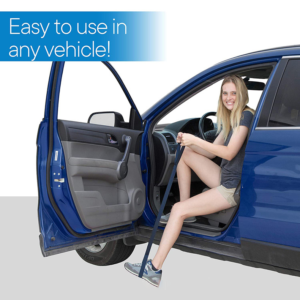
Where a Leg-Lifting Assist Strap Actually Gets Used (It’s Not Just the Bed) Search for leg lifters and the photos all look the same: someone sitting on the edge of a bed, strap looped around their foot. That is one use case. It is not the only one—and for many elderly users, it is not even the most valuable one. Here is where a leg-lifting assist strap actually earns its place in daily life. 1. The Car: The Transfer Nobody Talks About Getting into a car is mechanically harder than getting into bed. The seat is often higher or lower, the door frame restricts your movement, and you cannot use your body weight the same way. For elderly users with leg weakness or stiffness, the car becomes a source of dread—or a reason to stop going anywhere. A leg lifter changes that. You sit on the seat, loop the strap under your foot, and use your arms to lift and guide the leg into the footwell. One user with lymphedema described using it specifically for her son‘s car, which was higher off the ground: “The leg lifter is a great aid, to helping get into the car… It is not

Read More »
Master Medical | Leg-Lifting Assist Strap for Elderly: 5 Reasons It’s Essential After Knee Surgery

Leg-Lifting Assist Strap for Elderly: 5 Reasons It’s Essential After Knee Surgery

Why a Leg-Lifting Assist Strap Becomes Non-Negotiable After Knee or Hip Surgery The first week after a total knee replacement is a lesson in humility. Your leg feels like it weighs fifty pounds, and the simple act of lifting it onto the bed becomes a two-person job—or an impossible one if you live alone. A leg-lifting assist strap for the elderly is not a luxury item. For post-surgical patients, it is the difference between independence and calling for help at 2 a.m. 1. Your Quadriceps Have Forgotten How to Work After knee surgery, the quadriceps muscle often shuts down temporarily. This phenomenon—sometimes called arthrogenic muscle inhibition—means you physically cannot lift your own leg, even if you want to. A leg lifter strap bypasses the problem entirely: you use your arms to lift the strap, and the strap lifts your leg. One knee replacement patient described it bluntly: “Right after surgery your knee will be so sore you won‘t be able to lift it to get into bed… This basic lifter was a god send” . 2. Hip Replacement Protocols Restrict the Exact Movement You Need Hip replacement patients face a different constraint. The standard posterior approach prohibits bending the hip

Read More »

Shoulder Restraint vs Shoulder Immobilizer: What Buyers Get Wrong

Shoulder Restraint vs Shoulder Immobilizer: Two Devices, Two Completely Different Purposes Search for “shoulder restraint” on Google or Amazon and you will find hundreds of results for arm slings, rotator cuff supports, and post-surgery shoulder immobilizers. Those products are not restraints. Confusing the two wastes money and, in a care context, creates a false sense of safety. Here is the distinction that matters. What a Shoulder Immobilizer Actually Does A shoulder immobilizer is a rehabilitation device. It supports an injured arm and shoulder after surgery, dislocation, or fracture, keeping the joint in a protected position while it heals. The MSD Manual describes the standard technique: the elbow is held at 90 degrees, the arm is supported in a sling, and an elastic bandage may be wrapped around the torso to limit rotation . The goal is healing, not behavior management. Immobilizers are designed for cooperative patients. A person wearing one can, if they choose, remove it or move in ways that compromise the repair. The device assumes the user wants to protect the injury. What a Shoulder Restraint Actually Does A shoulder restraint is a safety device. It limits upper-body movement to prevent a person from rising unassisted, sliding forward

Read More »
Master Medical | Shoulder Restraint Safety: 7 Rules Every Caregiver Must Follow

Shoulder Restraint Safety: 7 Rules Every Caregiver Must Follow

7 Shoulder Restraint Safety Rules That Separate Care From Harm A shoulder restraint is a tool with a narrow margin between safety and harm. The same device that prevents a fall can cause a pressure injury, restrict breathing, or become a hazard in an emergency. The difference is not the product—it is the routine. These are the rules that experienced caregivers follow without exception. 1. Verify the Prescription or Care Plan First A shoulder restraint is not a decision a caregiver makes alone. In facility settings, restraints require a physician‘s order, a documented rationale, and a care plan review. In home care, the decision should involve the patient’s clinician, especially if the patient has cognitive impairment or is on medications that affect alertness. If no one has formally assessed whether the restraint is appropriate, do not apply it. 2. Fit Over Clothing—Never on Bare Skin Straps should always sit over clothing, with a soft layer between the device and the skin. If the patient‘s clothing is thin or the strap is narrow, add a padded sleeve or a folded cloth. Before each use, check that the strap is not twisted and that it lies flat. A twisted strap concentrates pressure

Read More »
Master Medical | Shoulder Restraint for Elderly Care: 6 Buying Mistakes to Avoid

Shoulder Restraint for Elderly Care: 6 Buying Mistakes to Avoid

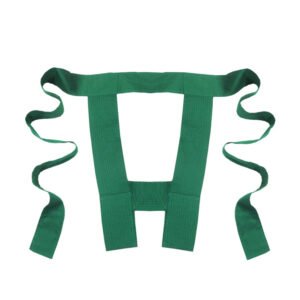
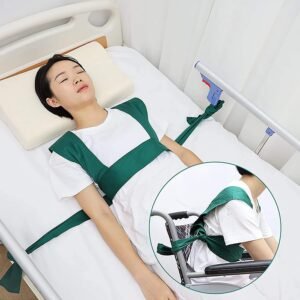
Shoulder Restraint Types Explained: Which Configuration Fits Your Care Setting? Shoulder restraints are not one product category. A strap system that anchors to a bed frame solves a different problem than a wheelchair-mounted restraint or a vest-style device. Choosing the wrong type wastes money and creates a false sense of security. Here is how to match the configuration to the situation. Bed-Anchor Shoulder Restraints: Fall Prevention for Lying Patients These devices typically consist of a chest or shoulder strap system that connects to the bed frame, limiting the patient’s ability to sit up or swing their legs over the edge. The anchor point is critical: it must be a fixed part of the bed that does not move when the patient pulls. Who it fits:Patients who attempt to rise unassisted from bed, particularly those with dementia, agitation, or post-surgical confusion. The restraint allows turning and repositioning while preventing the dangerous sit-up-and-stand motion. Who should skip it:Patients who are primarily in a wheelchair during waking hours. A bed-anchor system is useless once the patient is transferred. Wheelchair-Configured Shoulder Restraints: Safety During Seated Transport and Daily Sitting Wheelchair restraints route the shoulder strap around the chair frame rather than a bed. Some

Read More »

Bed Ladder Assist With Handle Rope: 5 Recovery Scenarios

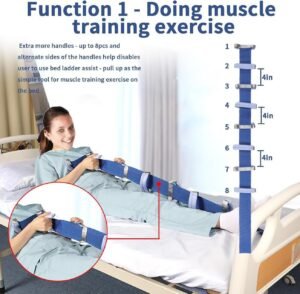
Why a Bed Ladder Assist With Handle Rope Becomes Essential After Surgery—and for Daily Independence The moment you cannot sit up in bed without help is the moment you realize how much independence depends on a simple movement. A bed ladder assist with handle rope is a low-tech solution: a strap anchored to the bed frame, with padded grips the user pulls to rise to a seated position. But its value is not just mechanical. For the right user, it restores control during a period when control feels scarce. Scenario 1: Abdominal Surgery Recovery After abdominal surgery, the core muscles that initiate a sit-up are compromised. Pushing up with the arms alone strains the incision site. A bed ladder allows the user to pull with the arms while keeping the torso relatively stable. One user who had emergency abdominal surgery and lived alone wrote: “This small genius product kept me from staying in the hospital even longer because it gave me independence” . Another reviewer described it as “awesome for post ovarian cyst surgery” with “sturdy” construction and handles that “have good grip” . Scenario 2: Hip Replacement and Lower Extremity Weakness Hip replacement protocols often restrict the deep hip

Read More »
Master Medical | Bed Ladder Assist With Handle Rope: Install It Right in 5 Steps

Bed Ladder Assist With Handle Rope: Install It Right in 5 Steps

How to Install a Bed Ladder Assist With Handle Rope So It Actually Stays Put The number one reason a bed ladder assist fails is not the product—it is the installation. A ladder anchored to a loose leg, draped without tension, or adjusted to the wrong height will shift under load. That shift is the difference between a safe sit-up and a fall. This guide covers the five-step installation process and the bed types that require extra attention. Step 1: Identify a Fixed Anchor Point The ladder must attach to a part of the bed that does not move when the user pulls. On a traditional bed frame, the legs at the foot of the bed are the standard anchor point . Loop the strap around the leg, thread it through the buckle, and pull tight. What if there is no frame leg? Platform beds, divans, and beds on solid bases are the most common compatibility complaint. One buyer with a plywood base bed “had to manufacture attachment points and screw them to the bottom of the plywood” . Another strapped the ladder to the slats under the mattress with success . The key is a point that will not

Read More »
Master Medical | Bed Ladder Assist With Handle Rope: 5 Buying Mistakes to Avoid

Bed Ladder Assist With Handle Rope: 5 Buying Mistakes to Avoid

Bed Ladder Assist With Handle Rope: What Real Buyers Praise, What They Regret Product listings show the device in ideal lighting. Buyer reviews show what happens after three weeks of nightly use. We read through the recurring themes in feedback for bed ladder assist devices with handle ropes—the features users love, the defects that cause returns, and the practical checks that separate a daily-use tool from a return-bin item. What Buyers Consistently Love 1. It restores independence without permanent installation. The most repeated theme across reviews is the psychological value of self-reliance. One user with MS put it plainly: “I live alone and this will keep me safe for those unexpected moments. I was considering a bed rail but that would be really annoying and cumbersome. This is way cheaper and if I don‘t want to use it I can stick it in a drawer” . A bed rail is furniture. A ladder rope is a tool you can put away. 2. Padded EVA foam handles make the device usable for people with hand weakness. The Vive model uses three 5-inch EVA foam handles spaced 10.5 inches apart . Reviews from users with arthritis and neuropathy consistently report that the

Read More »
test

3 Handle Bed Ladder Assist: 5 Recovery Scenarios It Solves

Why a 3 Handle Strap Pull Up Assist Device Becomes Essential After Surgery—and for Daily Independence The moment you cannot sit up in bed without help is the moment you realize how much independence depends on a simple movement. A 3 handle bed ladder assist is a low-tech solution: a strap anchored to the bed frame, with three padded grips the user pulls to rise to a seated position. But its value is not just mechanical. For the right user, it restores control during a period when control feels scarce. Scenario 1: Abdominal Surgery Recovery After abdominal surgery, the core muscles that initiate a sit-up are compromised. Pushing up with the arms alone strains the incision site. A bed ladder allows the user to pull with the arms while keeping the torso relatively stable. One reviewer described it directly: “Awesome for post ovarian cyst surgery! Easy to attach to bed. Sturdy and handles have good grip” . Another wrote: “I got it due to a recent abdominal surgery but will keep it attached to my bed due to a bad back” . Why the third handle matters here:The intermediate grip point allows the user to pull in smaller increments, reducing the sudden

Read More »

Submit Your Sourcing Request

Please complete the form below and our customer support team will be in touch with you shortly. Inquiries submitted through this form will receive priority processing over emails.