Why a Leg-Lifting Assist Strap Becomes Non-Negotiable After Knee or Hip Surgery
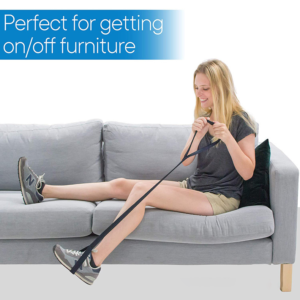
The first week after a total knee replacement is a lesson in humility. Your leg feels like it weighs fifty pounds, and the simple act of lifting it onto the bed becomes a two-person job—or an impossible one if you live alone. A leg-lifting assist strap for the elderly is not a luxury item. For post-surgical patients, it is the difference between independence and calling for help at 2 a.m.
1. Your Quadriceps Have Forgotten How to Work
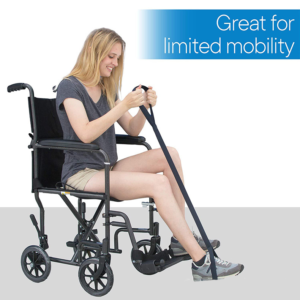
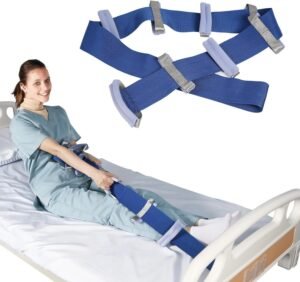
After knee surgery, the quadriceps muscle often shuts down temporarily. This phenomenon—sometimes called arthrogenic muscle inhibition—means you physically cannot lift your own leg, even if you want to. A leg lifter strap bypasses the problem entirely: you use your arms to lift the strap, and the strap lifts your leg. One knee replacement patient described it bluntly: “Right after surgery your knee will be so sore you won‘t be able to lift it to get into bed… This basic lifter was a god send” .
2. Hip Replacement Protocols Restrict the Exact Movement You Need
Hip replacement patients face a different constraint. The standard posterior approach prohibits bending the hip past 90 degrees—which makes the natural motion of lifting your leg into bed a compliance risk. A leg lifter allows you to keep the hip relatively straight while your arms do the lifting. One reviewer who had a hip replacement called it “absolutely an essential item… couldn’t manage without it” .
3. The Car Is Harder Than the Bed
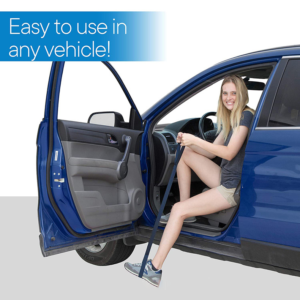
Most people buy a leg lifter for bed transfers and then discover it saves them in the car. Getting into a vehicle requires lifting the leg against gravity at an awkward angle, often while seated on a seat that is higher or lower than ideal. One user reported buying a second strap just to keep in the car: “The leg lifter strap works very well… it definitely helps getting in and out of the car and bed” .
4. Rigid vs Soft: The Choice That Determines Usability
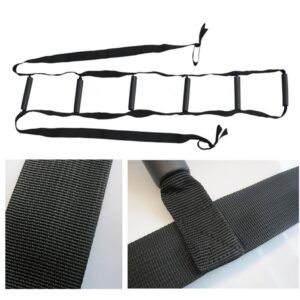
There are two broad categories of leg lifter: rigid (with a stiffened stem or metal core) and soft (all-fabric webbing). For post-surgical use, rigid is almost always the better choice. A soft strap requires you to throw it over your foot like a lasso, which is difficult when you cannot move your leg. A rigid lifter has a foot loop that stays open, so you can slide your foot in without bending or straining. One long-term user who tried both put it simply: “The semi-rigid central ‘core’ makes it better than the all-fabric type I had been using and gives me more control” .
5. The Two-Week Rule
Most knee and hip replacement patients use the leg lifter intensively for two to three weeks, then gradually wean off it as quadriceps function returns. One reviewer described her timeline: “I think I stopped using this in the 3rd week sometime, but it‘s THE BEST $15 YOU’LL SPEND TO GET THROUGH THE FIRST TWO WEEKS” . The low cost relative to the independence gained is the reason physical therapists recommend buying one before surgery—not after.
A Practical Note for Caregivers:If you are buying for a parent, confirm the strap length matches their height and bed height. A 35-inch lifter works for most adults; taller users or higher beds may need a longer model. Also check whether the foot loop is padded—bare webbing can be uncomfortable against bare feet or socks.
Bottom line:A leg-lifting assist strap is not a permanent mobility device. It is a temporary bridge between surgery and recovery. Buy it before the surgery, keep it within reach, and expect to retire it in a few weeks. The independence it buys during those weeks is worth every penny.