Why the Wrong Adjustable Bed Ladder Assist Rope Fails When You Need It Most
An adjustable bed ladder assist rope looks simple: a strap, some handles, a buckle. But the difference between a device that helps someone sit up safely and one that slips under load is often invisible in the product photo. Real user reviews reveal a consistent pattern of failure points. Here is what to check before you buy—and why the adjustment mechanism matters more than the handle count.
1. The Adjustment Buckle Is the Weakest Link
The single most dangerous complaint across adjustable bed ladder reviews is the buckle sliding under pressure. One reviewer described it bluntly: “The buckle length adjustment is useless. It slides and skips as soon as you put pressure on it… it’s very dangerous as the buckles can slide and let go as you’re pulling on the handles causing you to fall backwards” . This is not a minor inconvenience. A ladder that releases mid-pull defeats the entire purpose of the device.
What to look for:A composite buckle with a positive locking mechanism, not a simple slide friction buckle. Metal cam buckles or double-locking composite clips are more secure than single-pass plastic slides. If the listing does not specify the buckle type, ask before buying.
2. Strap Length Must Match the Bed—and the User’s Reach
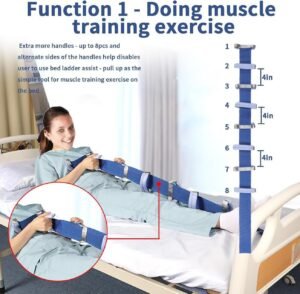
Standard lengths vary widely: 78 inches, 80 inches, 136 inches, 160 inches, and 200 inches all appear in listings . A strap that is too short for a queen or king bed will anchor poorly and leave the first handle out of reach. A strap that is excessively long creates loose webbing that can tangle.
The practical check:Measure the distance from your bed frame anchor point to where the user’s waist sits when lying down. The first handle should reach waist level without requiring the user to stretch or twist. If you cannot find this measurement in the listing, that is a red flag.
3. Handle Design: Foam Rungs vs Rigid Grips
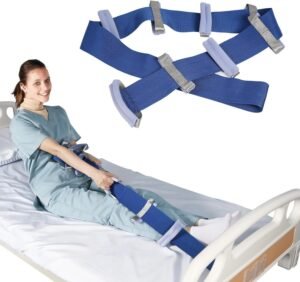
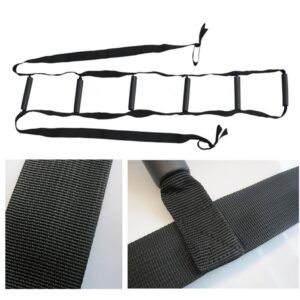
There are two broad handle styles: padded foam grips attached to the webbing, and the webbing itself folded into rungs. Foam grips are more comfortable and reduce hand strain during repeated pulling. Bare webbing rungs can bite into the hands and, as one reviewer noted, “are just made of the strap material therefore using it hand over hand, rung by rung to pull yourself up doesn’t work” .
Who benefits most:Users with arthritis, neuropathy, or limited grip strength need padded, non-slip handles. Foam or EVA-wrapped grips with a curved profile prevent the hand from sliding and distribute pressure across the palm rather than concentrating it on the fingers .
4. Weight Capacity: The Number Behind the Number
Most adjustable bed ladder assist ropes list a 300 lb capacity . That number is a static load rating. During a sit-up, the load is dynamic—the user’s body weight shifts, and the pull is angled rather than straight down. A 300 lb ladder used by a 250 lb user with weak core strength may experience peak loads closer to the limit than the static rating suggests. For users near or above 250 lbs, look for documented stitching reinforcement and a buckle system rated for the load.
5. Anchor Compatibility: Bed Frames and Adjustable Beds
Not every bed has a convenient frame leg to strap around. Platform beds, adjustable beds with solid bases, and beds with slats require different anchoring approaches. One reviewer solved this by manufacturing attachment points and screwing them to the underside of the plywood base . Another strapped the ladder to the slats under the mattress .
Before you buy:Identify a fixed, weight-bearing point at the foot of your bed. If your bed has no frame legs, confirm the ladder includes a method for creating an anchor point—or plan to add one yourself. Adjustable beds require extra care: the strap must not interfere with the moving mechanism, and the anchor point must be on a stationary section.
6. Cleaning and Inspection: The Maintenance Nobody Plans For
Reusable bed ladders accumulate skin cells, sweat, and dust. Most are wipe-clean only—a damp cloth and mild detergent, then air dry . Before every use, run your hands along the webbing and check the stitching. A frayed strap or a cracked buckle can fail with no warning.
Bottom line:The best adjustable bed ladder assist rope is the one whose buckle locks positively, whose length reaches the user’s waist without slack, and whose handles the user can actually grip. Verify those three things before you trust the device with someone’s safety.