3 Handle Strap Pull Up Assist: What 200 Buyers Reveal

3 Handle Strap Pull Up Assist Device: What Buyers Praise, What They Regret

Product listings show the device in ideal lighting. Buyer reviews show what happens after three weeks of nightly use. We read through the recurring themes in feedback for 3 handle bed ladder assist straps—the features users love, the defects that cause returns, and the surprising use cases that emerge—so you can choose with your eyes open.

The Praise Pattern: Three Features Buyers Consistently Love

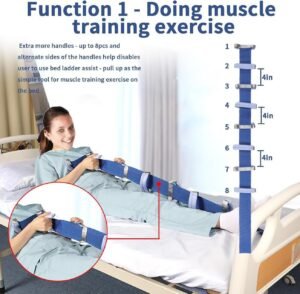
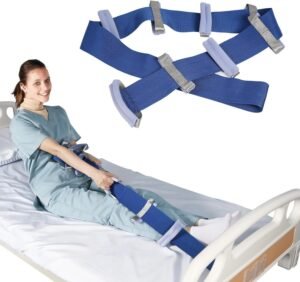
1. The third handle makes a real difference for shorter-reach users. A two-handle ladder forces the user to pull from a fixed distance. The third handle adds an intermediate grip point, which matters for users with limited shoulder mobility or shorter arms. One caregiver noted that her sister with Parkinson‘s could “reach it easier than regular one,” because the extra handle allowed a more gradual pull sequence .

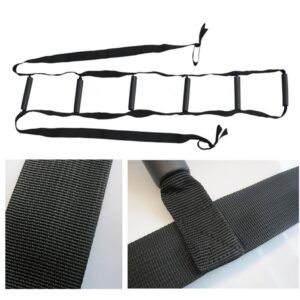
2. Padded foam grips are not a luxury—they are the deciding factor. Buyers with arthritis, neuropathy, or general hand weakness consistently report that the foam handles make the device usable at all. The KkaFFe model uses 5-inch round foam sponge handles, and users describe them as “comfortable” and essential for repeated daily use . Bare webbing rungs, by contrast, get abandoned quickly.

3. Post-surgical users become long-term users. A recurring pattern in reviews: someone buys the ladder for a specific recovery—abdominal surgery, hip replacement, C-section—and then keeps it. One reviewer wrote: “I got it due to a recent abdominal surgery but will keep it attached to my bed due to a bad back” . Another hip replacement patient called it “almost impossible to get in and out of bed without it” .

The Complaint Pattern: Four Failure Points Buyers Regret

1. The buckle can spring open under load. This is the most serious defect reported. One UK reviewer described the clip “sprang open and just missed hitting us,” calling it “not fit for purpose” . A buckle that releases mid-pull defeats the entire purpose of the device. The KkaFFe model uses a composite buckle, which works for many users but is not immune to failure .

What prevents it:Look for a buckle with a positive locking mechanism—a metal cam buckle or a double-locking composite clip. Test the lock by pulling firmly on the strap before the user touches it. If it slides or releases, do not use it.

2. Strap length does not match larger beds. The KkaFFe 3-handle model is a standard length, and multiple reviewers report it is too short for queen and king beds. One buyer wrote: “Decent, but not long enough for my queen bed” . Another wished it were “slightly longer” due to their bed height .

What prevents it:Measure the distance from your anchor point to the user‘s waist before ordering. If you have a queen or king bed, look for a model with a stated length of 82 inches or more, or choose an adjustable-length design with a longer maximum reach .

3. It slides on the bed surface. The ladder lies on top of the mattress, and without proper tension, it can shift during use. One reviewer noted the device “slid about along the bed rail at the bottom” and ended up in the bin .

What prevents it:Adjust the strap so the first handle reaches the user’s waist while lying down, then pull the anchor end tight before locking. Some models include a loop or cord to tuck under the mattress or bottom sheet for extra stability .

4. It does not fit divan or platform beds without exposed legs. The KkaFFe model anchors by looping around a bed leg or frame. Buyers with divan-style beds—where the base is upholstered and the legs are small or recessed—report that it “does not attach” and had to be returned .

What prevents it:Identify a fixed anchor point before buying. If your bed has no accessible frame leg, look for a model that includes a strap long enough to wrap around the entire bed base, or plan to add a dedicated anchor point.

The Surprising Use Cases Buyers Discover

  • Parkinson‘s and dementia care:The grasping reflex remains strong even when cognitive understanding fades. One caregiver reported her mother with advanced dementia “was able to pull herself into a sitting position remarkably easily” with minimal guidance .

  • Turning and repositioning:Users with back pain use the ladder to roll and adjust position, not just to sit up .

  • Travel:The compact strap folds into a suitcase and anchors to hotel beds—a use case bed rails cannot serve .

A Buyer’s Decision Checklist

Before you buy a 3 handle strap pull up assist device, verify these four points:

  1. Buckle type:Positive-locking cam or double-lock composite, not a friction slide.

  2. Stated strap length:Long enough to reach from your anchor point to the user‘s waist.

  3. Handle material:Padded foam or EVA grips, confirmed by buyer photos.

  4. Anchor compatibility:Matches your bed type—frame leg, slat, or full-base wrap.

Bottom line:The third handle is a genuine improvement for users who need an intermediate grip point. But the buckle and the strap length determine whether the device gets used daily or returned. Choose based on those two features first, and the handle count second.
RELATED POSTS

Master Medical | Leg-Lifting Assist Strap: Rigid vs Soft vs Thigh Lifter Compared

Leg-Lifting Assist Strap: Rigid vs Soft vs Thigh Lifter Compared

Leg-Lifting Assist Strap Types Explained: Which Design Actually Works for Your Situation? Not all leg lifters are the same product with different colors. There are three distinct designs on the market, and they solve different problems. Buying the wrong type means the device sits in a drawer while you continue to struggle. Here is how to match the design to the user. Type 1: Rigid Leg Lifter (Stiffened Stem or Metal Core) This is the most common design for post-surgical and elderly users. A stiffened rod or metal strip runs along the length of the strap, keeping the foot loop open and rigid. You slide your foot into the loop without bending, then use the handles or wrist loop to lift. Strengths:The foot loop stays open, which means no lassoing, no bending, and no frustration. The rigid stem gives directional control—you can guide the leg precisely where you want it. One long-term user with neuronal damage described the difference: “The semi-rigid central ‘core’ makes it better than the all-fabric type I had been using and gives me more control positioning the leg where I want it to go” . Weaknesses:Rigid lifters are bulkier than soft straps and cannot be folded

Read More »
Master Medical | Leg-Lifting Assist Strap for Elderly: Reclaim Independence in 4 Places

Leg-Lifting Assist Strap for Elderly: Reclaim Independence in 4 Places

Where a Leg-Lifting Assist Strap Actually Gets Used (It’s Not Just the Bed) Search for leg lifters and the photos all look the same: someone sitting on the edge of a bed, strap looped around their foot. That is one use case. It is not the only one—and for many elderly users, it is not even the most valuable one. Here is where a leg-lifting assist strap actually earns its place in daily life. 1. The Car: The Transfer Nobody Talks About Getting into a car is mechanically harder than getting into bed. The seat is often higher or lower, the door frame restricts your movement, and you cannot use your body weight the same way. For elderly users with leg weakness or stiffness, the car becomes a source of dread—or a reason to stop going anywhere. A leg lifter changes that. You sit on the seat, loop the strap under your foot, and use your arms to lift and guide the leg into the footwell. One user with lymphedema described using it specifically for her son‘s car, which was higher off the ground: “The leg lifter is a great aid, to helping get into the car… It is not

Read More »
Master Medical | Leg-Lifting Assist Strap for Elderly: 5 Reasons It’s Essential After Knee Surgery

Leg-Lifting Assist Strap for Elderly: 5 Reasons It’s Essential After Knee Surgery

Why a Leg-Lifting Assist Strap Becomes Non-Negotiable After Knee or Hip Surgery The first week after a total knee replacement is a lesson in humility. Your leg feels like it weighs fifty pounds, and the simple act of lifting it onto the bed becomes a two-person job—or an impossible one if you live alone. A leg-lifting assist strap for the elderly is not a luxury item. For post-surgical patients, it is the difference between independence and calling for help at 2 a.m. 1. Your Quadriceps Have Forgotten How to Work After knee surgery, the quadriceps muscle often shuts down temporarily. This phenomenon—sometimes called arthrogenic muscle inhibition—means you physically cannot lift your own leg, even if you want to. A leg lifter strap bypasses the problem entirely: you use your arms to lift the strap, and the strap lifts your leg. One knee replacement patient described it bluntly: “Right after surgery your knee will be so sore you won‘t be able to lift it to get into bed… This basic lifter was a god send” . 2. Hip Replacement Protocols Restrict the Exact Movement You Need Hip replacement patients face a different constraint. The standard posterior approach prohibits bending the hip

Read More »

Shoulder Restraint vs Shoulder Immobilizer: What Buyers Get Wrong

Shoulder Restraint vs Shoulder Immobilizer: Two Devices, Two Completely Different Purposes Search for “shoulder restraint” on Google or Amazon and you will find hundreds of results for arm slings, rotator cuff supports, and post-surgery shoulder immobilizers. Those products are not restraints. Confusing the two wastes money and, in a care context, creates a false sense of safety. Here is the distinction that matters. What a Shoulder Immobilizer Actually Does A shoulder immobilizer is a rehabilitation device. It supports an injured arm and shoulder after surgery, dislocation, or fracture, keeping the joint in a protected position while it heals. The MSD Manual describes the standard technique: the elbow is held at 90 degrees, the arm is supported in a sling, and an elastic bandage may be wrapped around the torso to limit rotation . The goal is healing, not behavior management. Immobilizers are designed for cooperative patients. A person wearing one can, if they choose, remove it or move in ways that compromise the repair. The device assumes the user wants to protect the injury. What a Shoulder Restraint Actually Does A shoulder restraint is a safety device. It limits upper-body movement to prevent a person from rising unassisted, sliding forward

Read More »
Master Medical | Shoulder Restraint Safety: 7 Rules Every Caregiver Must Follow

Shoulder Restraint Safety: 7 Rules Every Caregiver Must Follow

7 Shoulder Restraint Safety Rules That Separate Care From Harm A shoulder restraint is a tool with a narrow margin between safety and harm. The same device that prevents a fall can cause a pressure injury, restrict breathing, or become a hazard in an emergency. The difference is not the product—it is the routine. These are the rules that experienced caregivers follow without exception. 1. Verify the Prescription or Care Plan First A shoulder restraint is not a decision a caregiver makes alone. In facility settings, restraints require a physician‘s order, a documented rationale, and a care plan review. In home care, the decision should involve the patient’s clinician, especially if the patient has cognitive impairment or is on medications that affect alertness. If no one has formally assessed whether the restraint is appropriate, do not apply it. 2. Fit Over Clothing—Never on Bare Skin Straps should always sit over clothing, with a soft layer between the device and the skin. If the patient‘s clothing is thin or the strap is narrow, add a padded sleeve or a folded cloth. Before each use, check that the strap is not twisted and that it lies flat. A twisted strap concentrates pressure

Read More »
Master Medical | Shoulder Restraint for Elderly Care: 6 Buying Mistakes to Avoid

Shoulder Restraint for Elderly Care: 6 Buying Mistakes to Avoid

Shoulder Restraint Types Explained: Which Configuration Fits Your Care Setting? Shoulder restraints are not one product category. A strap system that anchors to a bed frame solves a different problem than a wheelchair-mounted restraint or a vest-style device. Choosing the wrong type wastes money and creates a false sense of security. Here is how to match the configuration to the situation. Bed-Anchor Shoulder Restraints: Fall Prevention for Lying Patients These devices typically consist of a chest or shoulder strap system that connects to the bed frame, limiting the patient’s ability to sit up or swing their legs over the edge. The anchor point is critical: it must be a fixed part of the bed that does not move when the patient pulls. Who it fits:Patients who attempt to rise unassisted from bed, particularly those with dementia, agitation, or post-surgical confusion. The restraint allows turning and repositioning while preventing the dangerous sit-up-and-stand motion. Who should skip it:Patients who are primarily in a wheelchair during waking hours. A bed-anchor system is useless once the patient is transferred. Wheelchair-Configured Shoulder Restraints: Safety During Seated Transport and Daily Sitting Wheelchair restraints route the shoulder strap around the chair frame rather than a bed. Some

Read More »

Bed Ladder Assist With Handle Rope: 5 Recovery Scenarios

Why a Bed Ladder Assist With Handle Rope Becomes Essential After Surgery—and for Daily Independence The moment you cannot sit up in bed without help is the moment you realize how much independence depends on a simple movement. A bed ladder assist with handle rope is a low-tech solution: a strap anchored to the bed frame, with padded grips the user pulls to rise to a seated position. But its value is not just mechanical. For the right user, it restores control during a period when control feels scarce. Scenario 1: Abdominal Surgery Recovery After abdominal surgery, the core muscles that initiate a sit-up are compromised. Pushing up with the arms alone strains the incision site. A bed ladder allows the user to pull with the arms while keeping the torso relatively stable. One user who had emergency abdominal surgery and lived alone wrote: “This small genius product kept me from staying in the hospital even longer because it gave me independence” . Another reviewer described it as “awesome for post ovarian cyst surgery” with “sturdy” construction and handles that “have good grip” . Scenario 2: Hip Replacement and Lower Extremity Weakness Hip replacement protocols often restrict the deep hip

Read More »
Master Medical | Bed Ladder Assist With Handle Rope: Install It Right in 5 Steps

Bed Ladder Assist With Handle Rope: Install It Right in 5 Steps

How to Install a Bed Ladder Assist With Handle Rope So It Actually Stays Put The number one reason a bed ladder assist fails is not the product—it is the installation. A ladder anchored to a loose leg, draped without tension, or adjusted to the wrong height will shift under load. That shift is the difference between a safe sit-up and a fall. This guide covers the five-step installation process and the bed types that require extra attention. Step 1: Identify a Fixed Anchor Point The ladder must attach to a part of the bed that does not move when the user pulls. On a traditional bed frame, the legs at the foot of the bed are the standard anchor point . Loop the strap around the leg, thread it through the buckle, and pull tight. What if there is no frame leg? Platform beds, divans, and beds on solid bases are the most common compatibility complaint. One buyer with a plywood base bed “had to manufacture attachment points and screw them to the bottom of the plywood” . Another strapped the ladder to the slats under the mattress with success . The key is a point that will not

Read More »
Master Medical | Bed Ladder Assist With Handle Rope: 5 Buying Mistakes to Avoid

Bed Ladder Assist With Handle Rope: 5 Buying Mistakes to Avoid

Bed Ladder Assist With Handle Rope: What Real Buyers Praise, What They Regret Product listings show the device in ideal lighting. Buyer reviews show what happens after three weeks of nightly use. We read through the recurring themes in feedback for bed ladder assist devices with handle ropes—the features users love, the defects that cause returns, and the practical checks that separate a daily-use tool from a return-bin item. What Buyers Consistently Love 1. It restores independence without permanent installation. The most repeated theme across reviews is the psychological value of self-reliance. One user with MS put it plainly: “I live alone and this will keep me safe for those unexpected moments. I was considering a bed rail but that would be really annoying and cumbersome. This is way cheaper and if I don‘t want to use it I can stick it in a drawer” . A bed rail is furniture. A ladder rope is a tool you can put away. 2. Padded EVA foam handles make the device usable for people with hand weakness. The Vive model uses three 5-inch EVA foam handles spaced 10.5 inches apart . Reviews from users with arthritis and neuropathy consistently report that the

Read More »
test

3 Handle Bed Ladder Assist: 5 Recovery Scenarios It Solves

Why a 3 Handle Strap Pull Up Assist Device Becomes Essential After Surgery—and for Daily Independence The moment you cannot sit up in bed without help is the moment you realize how much independence depends on a simple movement. A 3 handle bed ladder assist is a low-tech solution: a strap anchored to the bed frame, with three padded grips the user pulls to rise to a seated position. But its value is not just mechanical. For the right user, it restores control during a period when control feels scarce. Scenario 1: Abdominal Surgery Recovery After abdominal surgery, the core muscles that initiate a sit-up are compromised. Pushing up with the arms alone strains the incision site. A bed ladder allows the user to pull with the arms while keeping the torso relatively stable. One reviewer described it directly: “Awesome for post ovarian cyst surgery! Easy to attach to bed. Sturdy and handles have good grip” . Another wrote: “I got it due to a recent abdominal surgery but will keep it attached to my bed due to a bad back” . Why the third handle matters here:The intermediate grip point allows the user to pull in smaller increments, reducing the sudden

Read More »

Submit Your Sourcing Request

Please complete the form below and our customer support team will be in touch with you shortly. Inquiries submitted through this form will receive priority processing over emails.