3 Handle Strap Pull Up Assist Device: What Buyers Praise, What They Regret
Product listings show the device in ideal lighting. Buyer reviews show what happens after three weeks of nightly use. We read through the recurring themes in feedback for 3 handle bed ladder assist straps—the features users love, the defects that cause returns, and the surprising use cases that emerge—so you can choose with your eyes open.
The Praise Pattern: Three Features Buyers Consistently Love
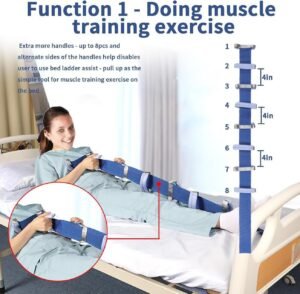
1. The third handle makes a real difference for shorter-reach users. A two-handle ladder forces the user to pull from a fixed distance. The third handle adds an intermediate grip point, which matters for users with limited shoulder mobility or shorter arms. One caregiver noted that her sister with Parkinson‘s could “reach it easier than regular one,” because the extra handle allowed a more gradual pull sequence .
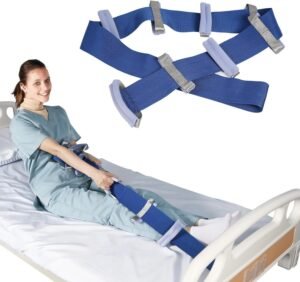
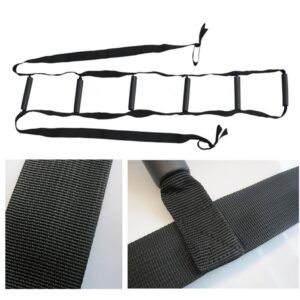
2. Padded foam grips are not a luxury—they are the deciding factor. Buyers with arthritis, neuropathy, or general hand weakness consistently report that the foam handles make the device usable at all. The KkaFFe model uses 5-inch round foam sponge handles, and users describe them as “comfortable” and essential for repeated daily use . Bare webbing rungs, by contrast, get abandoned quickly.
3. Post-surgical users become long-term users. A recurring pattern in reviews: someone buys the ladder for a specific recovery—abdominal surgery, hip replacement, C-section—and then keeps it. One reviewer wrote: “I got it due to a recent abdominal surgery but will keep it attached to my bed due to a bad back” . Another hip replacement patient called it “almost impossible to get in and out of bed without it” .
The Complaint Pattern: Four Failure Points Buyers Regret
1. The buckle can spring open under load. This is the most serious defect reported. One UK reviewer described the clip “sprang open and just missed hitting us,” calling it “not fit for purpose” . A buckle that releases mid-pull defeats the entire purpose of the device. The KkaFFe model uses a composite buckle, which works for many users but is not immune to failure .
What prevents it:Look for a buckle with a positive locking mechanism—a metal cam buckle or a double-locking composite clip. Test the lock by pulling firmly on the strap before the user touches it. If it slides or releases, do not use it.
2. Strap length does not match larger beds. The KkaFFe 3-handle model is a standard length, and multiple reviewers report it is too short for queen and king beds. One buyer wrote: “Decent, but not long enough for my queen bed” . Another wished it were “slightly longer” due to their bed height .
What prevents it:Measure the distance from your anchor point to the user‘s waist before ordering. If you have a queen or king bed, look for a model with a stated length of 82 inches or more, or choose an adjustable-length design with a longer maximum reach .
3. It slides on the bed surface. The ladder lies on top of the mattress, and without proper tension, it can shift during use. One reviewer noted the device “slid about along the bed rail at the bottom” and ended up in the bin .
What prevents it:Adjust the strap so the first handle reaches the user’s waist while lying down, then pull the anchor end tight before locking. Some models include a loop or cord to tuck under the mattress or bottom sheet for extra stability .
4. It does not fit divan or platform beds without exposed legs. The KkaFFe model anchors by looping around a bed leg or frame. Buyers with divan-style beds—where the base is upholstered and the legs are small or recessed—report that it “does not attach” and had to be returned .
What prevents it:Identify a fixed anchor point before buying. If your bed has no accessible frame leg, look for a model that includes a strap long enough to wrap around the entire bed base, or plan to add a dedicated anchor point.
The Surprising Use Cases Buyers Discover
-
Parkinson‘s and dementia care:The grasping reflex remains strong even when cognitive understanding fades. One caregiver reported her mother with advanced dementia “was able to pull herself into a sitting position remarkably easily” with minimal guidance .
-
Turning and repositioning:Users with back pain use the ladder to roll and adjust position, not just to sit up .
-
Travel:The compact strap folds into a suitcase and anchors to hotel beds—a use case bed rails cannot serve .
A Buyer’s Decision Checklist
Before you buy a 3 handle strap pull up assist device, verify these four points:
-
Buckle type:Positive-locking cam or double-lock composite, not a friction slide.
-
Stated strap length:Long enough to reach from your anchor point to the user‘s waist.
-
Handle material:Padded foam or EVA grips, confirmed by buyer photos.
-
Anchor compatibility:Matches your bed type—frame leg, slat, or full-base wrap.
Bottom line:The third handle is a genuine improvement for users who need an intermediate grip point. But the buckle and the strap length determine whether the device gets used daily or returned. Choose based on those two features first, and the handle count second.